
Building a Community People Take Seriously
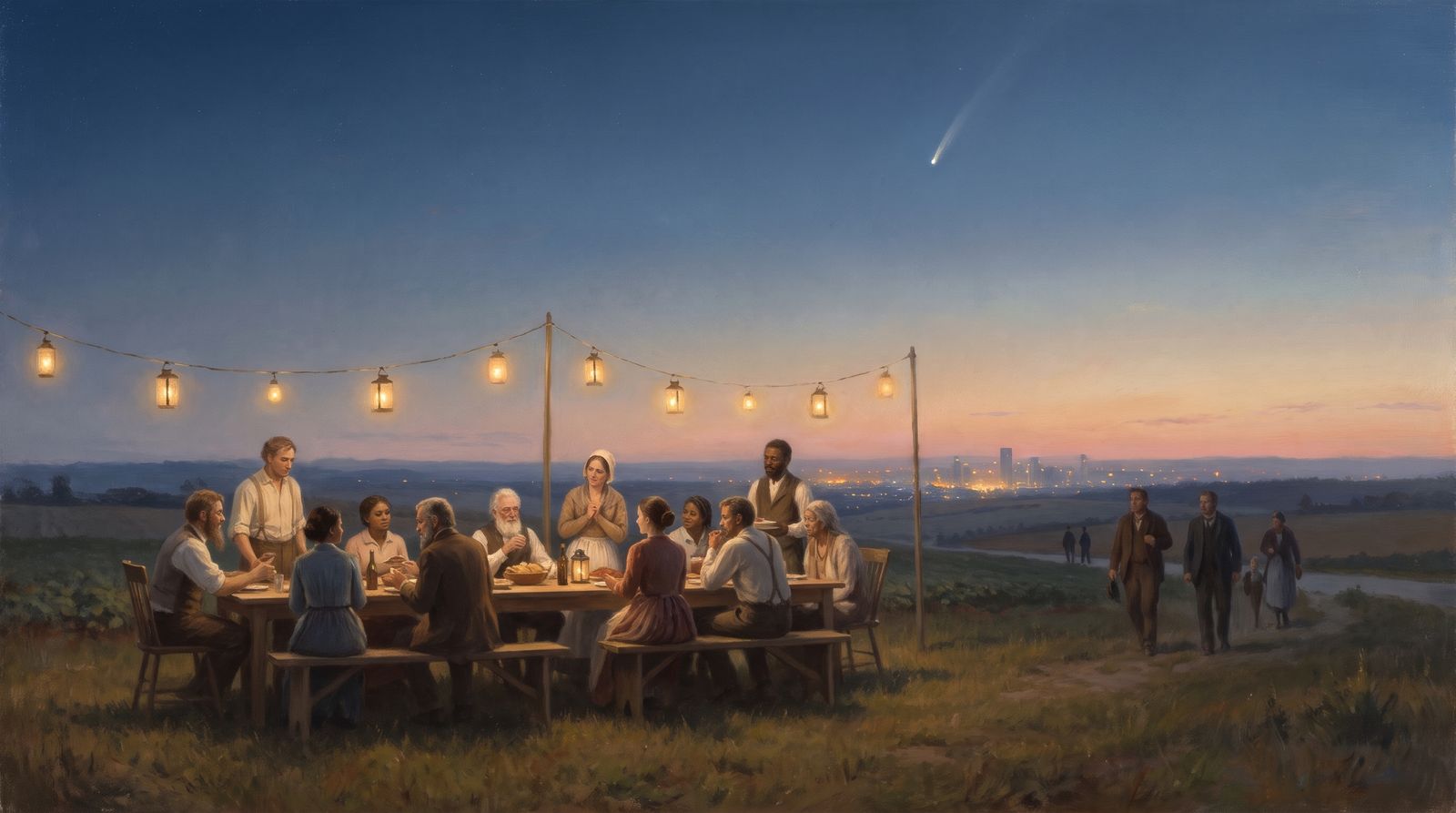
In Korea, people tend to look down on you when you say you run a community. Honestly, I get it. The word covers so much. A Naver Cafe (a popular Korean forum platform) that does nothing but group buys can call itself a community. I had never really taken part in a community before I started running Bloom, so a few months ago I probably saw it the same way. I would have wondered why anyone runs these things and who actually goes. Most likely I wouldn't have cared at all.
Then, somehow, I ended up running Bloom, an AI community with 7,100 unique applicants, 2,800 Discord members, and close to 150 people gathering one to three times a week. Along the way I turned into a community guy.
When I think hard about why community has such a bad reputation in Korea, it comes down to money. Ninety-nine percent of the time the answer is that it doesn't make any, and I think the reason it doesn't is that people judge the audience to be low quality. That is never the members' fault. It depends entirely on the organizers: their philosophy, their mission, and which people they target for which event. If you want a roundtable of only enterprise AX (AI transformation) decision-makers, you gather exactly those people and nobody else. If you want only working AI engineers, you can gather only them. If you're wondering whether that's actually possible, Bloom's demographic pool keeps getting wider, so these days we can target fairly precisely. That's why, thankfully, we've been able to work with a number of companies and keep our sponsorships going.
Even so, the people I care about most are the members, more than any partner. The members have to be there and be genuinely excited. Only then can I properly try anything later, whether that's a partnership, a festival, or something else.
So this time I decided to slow down after several months of running at full speed and hold a cozy retrospective, just for members, where we could talk. We would look at real data together: how many people applied to each event, which companies they came from, what they were interested in. It doesn't cover everyone, but I thought it would give us a rough read on what people in Korea's AI ecosystem care about. I also wanted to share, first and privately, the plans we're preparing to take Bloom to the next level. It was private because I wanted to hear members' honest opinions before going public, not because anything was secret. What sets us apart from big conferences is that we don't hold one huge event a year and call it done. We keep listening to our actual members and build, together with them, the things this industry really needs.
Until now, I mostly heard from people by asking for coffee chats after events or talking with them one on one at the venue. This time I set up a proper gathering just for that conversation. Since it was an internal event and I didn't want it to get too grand, I invited only about 20 people. In exchange, I wanted it to be dense: a chance to share our stories and find ways we could work together.
Gifts before we even started
The funny thing is that the conversation started the moment I posted on Discord that we'd be holding this.
One member who couldn't make it left a comment saying it would be interesting if the retrospective covered a sense of belonging along with program satisfaction. Applied sociologists who study sports fandom write that fans connect deeply less because they consume the games or the team and more because they use them to build relationships with other people, experience collective emotion, and feel part of that community. From that angle, this member said, Bloom's next question might be when people start to feel they are part of Bloom, and not only what events members want. They also wondered whether there was a path, beyond attending weekly events and joining Discord, for an audience member to become a participant and a participant to become a contributor, and whether members had a role in shaping Bloom's identity and direction themselves. One line stayed with me for a long time: one measure of success might be people walking away feeling that the people they belong with made something together, beyond feeling they'd been to a good event.
Another member, who has been active since Bloom's very earliest days and made good connections through it, said they'd be willing to volunteer wherever they could help the community grow. They suggested we open up collaboration so experts from many fields could contribute, almost like open source, even outside of company partnerships. This person has spent more than five years in blockchain, worked across several areas, and now works at a blockchain-based AI fintech company, and said they could contribute at that intersection. The part that stuck with me most: they had once run a community by themselves, burned out, and given it up. So they believe that for sustainability, diversity, and room to grow, it has to be built together.
A few days later, the member who left the first comment came back with a concrete example. It was the story of HITRECORD, an online creative collaboration community founded by the actor Joseph Gordon-Levitt. Here is how it works. First you open one big project, then break it into small challenges people can join right away. Members contribute writing, images, music, and video, and also take roles like curating, managing, and producing. They pick up what others have posted, edit it or remix it, and keep building the shared work. The final product credits the people who actually contributed, and when something was commercialized, the community followed a principle of sharing revenue with contributors.
The point they made was that we shouldn't copy this model as is. The principle was this: before vaguely asking "What can you contribute?", lay out the project you're working on now and the specific units of contribution it needs. Instead of recruiting "people who want to contribute to the community," show the work you need right now in small pieces, like planning a specific program, collecting real-world case studies, editing content, documenting, or running technical experiments, and build a structure where one contribution leads to the next role. They suggested that this would create many levels of participation between the organizers and the audience. From a project, to small challenges, to many kinds of contribution, to picking up and improving other people's work, to recognition for contributing, and back to the next round of participation.
One person messaged that they couldn't attend and sent along a long feedback document. They had another gathering that day, so instead they wrote up what they'd felt while taking part in Bloom and what they had experienced in other communities before. I won't share the contents here, since they said they'd polish it and share it with the community themselves. But I want to note that the fact alone, that someone wrote something for a gathering they couldn't attend, made opening this event worth it.
All I had done was post that we'd hold this gathering, and replies like these were already coming in. Cry Cheese Burger (a Korean burger chain) saw the post too and offered to sponsor burgers. Even those of us who run Bloom are still exploring and refining what its value is. It's a little funny that the people running it don't fully know. But when I see this many people paying attention, supporting us, coming by for coffee chats, and offering insights and advice, I take it to mean there's a lot more room for us to move forward and grow.
Thank you so much!
The member who built an archive from our Discord history
Then, on the day itself, there was one more gift I didn't see coming.
A member left a message. They were planning to attend the retrospective that day, and while going back through the Discord history to catch up on events they had missed, they'd put together a short summary in document form. They said some of the information might not be accurate but they were sharing it for reference, and posted a link: bloom-archive.vercel.app
I didn't make it. Our team didn't make it either. They were curious about events they'd missed, so they scrolled back through Discord, organized it all themselves, turned it into a website, and shared it with the community. Knowing we have core fans like this was the best possible opening for the day.
Introductions and fun facts
This meetup was completely different from our usual ones. Normally we bring in speakers from companies. This time we made it a place for members and organizers to just talk. The people who came are so valuable and special that I set it up to be casual and private, so they could network with each other too.
And I had already learned something. I opened it for 20 people and 35 came. No speakers, no agenda, just "let's get together," and that many people showed up.
This wasn't something we forced. We work hard to build the community every week, but even inside our team, opinions go back and forth about why we should be doing this at all. Mine do too. Every time, you all show up and take away good insights, and that keeps us going. Beyond that, though, I always have a lot of questions about how to sketch out our next step and the big picture. I'm new to community, so I wanted to hear what people thought. I also believe this isn't something we can do alone. We build it together, so I felt this gathering was necessary.
There weren't too many of us, so we went around one by one and shared our name, where we work, and a fun fact. This round of introductions ended up taking half the evening.
I went first with my fun fact. Partway through my career, I took a gap year of about 10 months and traveled the world with my wife. I cashed out the employee stock I'd been holding from my previous company and all my savings, about 100 million won, and spent 10 months on the road. Looking back it was reckless, but it was a time I could only have had then. I wrote a blog and tried YouTube too. For me it's a good memory and a precious experience that gave me insight and energy to keep moving forward.
One person had found the meetup early on while job hunting and has come more than 10 times this year alone. They wanted to brag a little: through someone they met here, they heard about an AX developer talent competition, entered it, and luckily made it to the finals.
Someone building SaaS at a US law firm said they're looking for developers, marketers, and UX designers. They've been coming to the community to learn more about the domain and have kept up coffee chats with a number of developers. They said hiring is really, really hard.
Someone who did strategy at a large company and left early this year said they got a lump sum, like me. They decided to try, as a freelancer, the AX work they used to do inside the company, and are now working in logistics. Developing and building is fine, they said, but understanding everyone's roles and relationships and persuading people one by one is exhausting. This turned out to be the same person who made and posted the archive I mentioned earlier.
There was a soon-to-be founder with 12 years in IT who is preparing to start a company next year, and someone who started coding with their son, has kept a side project going for three years, and now leads a study group. That second person's fun fact, unexpectedly, was that the pizza at the last event was really good, and that talking with three or four people they met in a corner on that rainy day was a lot of fun. I'm just grateful they remember only the good parts.
The stories kept coming. Someone who runs a dessert brand and came because, after working in a conservative industry, AI felt like a whole new world. Someone who took a one-year career break in Canada and is now back doing backend work. Someone who makes soccer games. Someone who works in venture capital and took the 2022 crypto crash head-on. That last story stayed with me. Their company and they personally took big losses overnight, and they had to deal with media attention on top of it. Over time, a lot of it worked itself out, they said, and the hardship seems to have made them a tougher person. They also came away mature enough to feel they had been through it well.
Someone who handles user experience at a securities firm came with teammates because they're very interested in building community. Someone who did MLOps at Toss (a major Korean fintech app) and now also does server development said they're looking for a way to survive as a developer in the AGI era.
The person from a company that runs outdoor digital billboards got the most nods that night. Of their 20 billboards, they use two for free promotion for public foundations and young artists, like a tithe on the business. But June and July were depressing for them. Here's why. A proposal that used to take them three days, AI wrote in 30 minutes, and far better than they could after seven years in the job. Something that didn't work just three months earlier started working past June. When they first saw the output, they tried to find something to correct and couldn't find anything. They were sinking into a "Am I done now?" kind of gloom when they came to that rainy-day event, got a huge boost of energy, and felt they could keep going.
Someone with 20 years in Korea's SI (systems integration) industry had a similar story. At the start of the year they felt negative about AI, were depressed and tossing and turning at night, saw a post on LinkedIn, and came. Since then they've come almost every time, so often it's hard to count. They got through it, they said, but where they are now is basically alone. Working on projects with Claude, at some point they found they were working by themselves. Today, to make it here, they had to wrap up work early, and working with other people had started to feel like more hassle. They also said they feel stuck at a large company and had been thinking of leaving, but Bloom made them reconsider, and they wanted advice on whether to go or stay.
There were others too. Someone at Naver Cloud who develops the HyperCLOVA business (Naver's large language model) said they read the first post I ever wrote and have followed me ever since. Someone who leads AI foundations at Microsoft. Someone on the AI team at a group services company who came to the community because they want to build something like an operating system for running their own life. Someone from a startup that launched its product this year after 10-plus years of R&D and is getting a response at home and abroad. And the CEO of Daytrip, who spoke at our Snowflake event last week.
The person from KT (a major Korean telecom company) had a fun observation. They love educational events like this and go to a lot of them, but they usually go once and stop. They assumed their first visit here would be their last, and before they knew it they kept coming back. When they analyzed why, it was this: the topics fall within what they're interested in, and the people they meet pile up, one visit after another. Somehow they keep meeting good people.
The highlight of the night was someone who worked at big tech for five years and now works at a US startup. They moved to the US through community. They had found a lot of healing in communities, and with that energy they shared a lot. They also spoke at other communities and were an organizer too. People started to think well of them, word got around, and quite a few opportunities came their way: speaking, teaching, consulting. In short, they introduced themselves as someone who gave a lot to communities and got a lot back.
Last, there was someone from Malaysia. They don't speak Korean, so they introduced themselves in English. They're the CEO of a company that sells enterprise software to banks and are looking at expanding beyond Southeast Asia into Korea. They came because they want to understand Korean business culture and the Korean tech scene.
Four months in data
After the introductions, I opened the slides I'd prepared. There was no big presentation. We just looked at the past four months together, based on our Luma data.
We started in April and it's now August, so a little over four months. In that time we had about 11,000 total applications, or 7,000 unique people once you remove duplicates. They came from about 4,600 companies. We held 26 events. Around 1,000 attendees were founders, C-level, or heads of teams, and the return rate was 40 percent. That means a lot of people have come through, and a lot of people come often.
By month, we held three events in April and five in May, then eight, then 10. We didn't plan it that way. Collaboration opportunities kept coming up, and so did topics we thought would be good to cover, and we ran with all that energy.
I want to point something out here. We are not a company that builds communities. Our actual business is building AI solutions for public procurement, meaning for companies that bid on government contracts. That's pretty far from community. But since we're in the AI industry too, I wanted to hear what people in this industry are thinking. Right around then, my blog post about Claude Blue (the low mood many people felt watching Claude get so good so fast) and Bloom went viral, and I thought it would be good to do something together with the Claude community. That's how it started.
Four moments that stuck with me
Our first event got 2,057 applications. When I saw that, I thought, people really care about this topic. We couldn't fit everyone, so we approved only 170, and messages poured in asking why they didn't get in. But to be honest, that first event kind of flopped. I'd never been to community events, so I figured I'd just bring in speakers I liked and have talks for two straight hours. I didn't know that people here don't come to listen to lectures. They come to network, connect, and share their own thoughts. Group chats filled up with complaints, and people were saying Claude Blue was a bust. I thought I was in real trouble.
Then Nam Sung-pil, CEO of AB180, heard what had happened. He said they had just moved into a new office, so we should use the space as much as we wanted, and they'd cover all the catering too. That gave me the courage to start again. Looking back, there's an irony: there was a second event because the first one flopped.
The second moment was WOOMUL. Usually about 100 people come, but I wanted to try for a jump, so I rented WOOMUL, a big cafe in Hapjeong (a Seoul neighborhood), and invited 300 people. Nearly 700 applied, and the space couldn't fit them all. It poured that day, and the people who came had a rough time getting there. Still, having done 300 once, I could start dreaming of 500 next, and then something even bigger.
The third was Singapore. I think our Discord may not be worth that much if it's only Koreans. Korea is basically one megacity, Seoul. If you want to meet someone, you say "see you at Gangnam Station." What I'm personally curious about is people overseas. Different languages, regions, and cultures make them hard to meet. But if I could see people in Singapore, Japan, the US, Canada, and the UK gathering and chatting in our Discord, and if those conversations came out of our own closed network that never shows up on social media, I thought that would mean a lot.
So I reached out to the Claude community in Singapore, which is English-speaking, in Asia, and where we have an office. I told them this had worked well in Korea and offered to do the same thing there, and they said come on over. Local partners kept trying to talk me out of it, saying a roundtable would never work. They said people in Singapore keep a very different face in business than in private, and that while they network well, they're reserved and shy, so getting together for a discussion wouldn't fly. I pushed ahead anyway. It went really well. People loved it and asked when we'd do it again. I don't think the format is that special, but apparently there isn't much of it out there.
Something hit me then. Our "from Blue to Bloom" story and the roundtable format may not be wildly unique, but at the very least they can work globally. They aren't tied to a very local culture. Anyone can relate to them, and I think the wish to connect with each other is the same all over the world. So in September we're going to Las Vegas too. My goal is to go abroad whenever there's a chance, bring new people into our Discord, and someday bring them to Korea to meet all of you.
Where people with nowhere else to go come
What I found really interesting in the data wasn't that global big tech companies showed up. It was the names below them. Partners at major law firms come. People from entertainment companies come. Someone even came from the Ministry of National Defense.
Here's why that surprised me. Developers have quite a few AI communities they can go to. They already have an open source culture and a community culture. But for someone like me on the business side, a community is a place to sell. Usually that means handing out business cards, collecting business cards, and then pestering people with cold emails. That tells you there's no community like this on the AI side, so people come because they have nowhere else to go.
When I think about it, I can't remember the last time I made a friend outside of work while holding a job. Apart from coworkers, it's really hard to meet people at random. I think Bloom became that kind of place. Developer communities are very tech-driven. I'm not a developer, and I try to cover a lot of topics I'm personally curious about, so it naturally became broad.
Quite a few senior people come too. There's an assumption that senior people don't come to communities. It's true they don't have much time, but they're just as curious. When I hear their stories, it's often that someone on their team came first, decided the boss needed to see this for anything to change, and brought them along.
We once asked about topics of interest. Agents, automation, and AX ranking first and second was a given. What mattered was what came after. I think there are exactly two reasons people come to an AI community. First, this is a time when companies and individuals are both thinking hard about how to survive in the AI era. Second, AI trends in Korea are covered very well on YouTube and people already know them, so they want to know what it's like in other countries, especially Silicon Valley. In the end it ties back to surviving this era. Sure enough, the third-ranked interest was overseas and global. I read that as a sign of where we need to go.
Eight lessons from four months
I picked eight of the notes I'd jotted down while running events and shared them.
First, Claude Blue isn't only FOMO. If it were FOMO, I'd have called it Claude FOMO. It's much more complex than that. We don't do the kind of marketing that stokes FOMO so people feel they'll fall behind if they don't come. That would make us feel bad about ourselves too. Everyone has FOMO, but talking in those terms only works for a moment. Once you've stirred up anxiety, nothing is left. The real reason to come is to connect, get insights, and as a result, grow.
Second, I expected people who run developer communities to dislike me. We're an AI community, yet we talk more about business than development, which makes us look like heretics. But when I meet them, they actually like it. There was a reason. These days, they say, developers aren't that interested in how to use AI well, since the frontier models help with all of it. What they want to know is what business results people are getting with AI in their own domains, and that's not the main focus of developer communities.
Third, together with others, I picked three weapons for the AI era: communication skills to figure out what the other person needs, the speed to learn with humility, and a habit of sharing what you know. These have always mattered, but they seem especially important now. You can see it in our speakers. They don't think of it as losing their know-how. You have to give first to get anything back, and giving builds your social presence and personal brand.
Fourth, the gap between the 1 percent and the 99 percent is widening. People here use AI a lot, but most people around them probably don't. Korea's AI adoption rate is among the highest in the world, and per capita, for certain services, Korea is second only to the US. That also means other countries use it far less. That's why more foreign companies are setting up their Asia-Pacific base in Korea. The reason is that no other country has individuals and companies adopting AI as much as Korea does, and K-pop has nothing to do with it. What I want to say here is that while we're thinking about how to move past the blues, a lot of people haven't even felt the blues yet.
That's also why I wrote my blog post. Developers have already lived through AI hitting their work hard once. The way developers work is similar to the way AI works, so it went straight into their jobs. Non-developers like us, people in sales or marketing who do unstructured work, may take a while longer to be replaced, because our work is so fragmented. But it's a matter of time, and when it comes it can snowball. So listening to developers who experienced the future first and putting it into language non-developers understand has become the role of our blog and our events.
Fifth, we need crazy ideas that change the world, beyond AI itself. I don't come from a technical background, so I see AI as a mindset, not a technology. In the past I couldn't have pulled off a 1,000-person event, but now with AI, maybe I can. That's the spirit of the times. What wins is what you can do with the technology, more than the technology itself. When Excel came out, people didn't think, "Excel's here, let's start a business with Excel." Excel helped the businesses they were already running. We should think about AI the same way, in terms of how it can help businesses that already exist.
I gave an example. I saw this recently: apparently there's a subscription service that puts mirrors on satellites to reflect sunlight down to the ground. If you're somewhere dark and subscribe to light, the satellite beams it down to you. They say it's used in rescue situations or at film shoots where it's hard to bring in lighting. Whether it works or not, it made me think an idea has to be that crazy to get attention these days.
Sixth, dopamine wins in the end. It's great to talk about how good a technology is and how it changes the world, but hitting someone's gut reaction is powerful. I used a cake company that got famous in Silicon Valley as an example. It's just a bakery. These days AI writes all the cold emails, so nobody reads them and they get filtered out. This company writes the cold email's message on a real, edible cake and delivers it to the target company. If there's security, they get past it. The person who receives it wonders who on earth would do this, and ends up reading the message. Portfolio companies of well-known Silicon Valley investment firms use this service, they say. It's a cake company, and its revenue is significant. I'd look. Whatever it said, I'd be curious enough to reach out.
Seventh, the criteria investors use have changed. They used to look at market size, but these days it's different, I'm told. Who knew the coding agent market would get this big? Coding agents existed in 2015 too, but back then people debated whether it would be a market worth a few trillion won. Now it's a market whose size is hard to even estimate. So now, more than market size, they look at the founder's ambition, the grit to get through the ups and downs, and the ability to execute.
Eighth, technology gets better over time, but marketing and distribution are still hard. Claude keeps getting so good that it startles me, but content is saturated, online ad prices keep rising, and there are fewer and fewer ways to reach people. I don't know if community will be the answer. But at least offline, you can bring together the people you want. It's like how you can put on an online class and play games while it runs, but if you go to an actual cram school, you'll pay attention, if only because you'd feel awkward not to.
So why do communities get looked down on
To sum up, it all comes back to one thing. Communities get looked down on because people judge the audience to be low quality. Does that mean the members did something wrong? No. The organizers got it wrong: their purpose, philosophy, and mission, and who they chose to bring together.
Say a company wants to meet AI engineers, and I throw in my whole pool, bring a bunch of marketers and designers, and announce that I gathered 1,000 people. Of course they'd say it wasn't great. That isn't the designers' fault or the marketers' fault. It's the fault of the person who brought them. You could bring in the chairman of a giant conglomerate, and I might not want to talk to the chairman at all. I might want to meet people who are full of energy. So when people say the audience is low quality, it's really an organizer problem.
That's why the people I care about most are the members, not the partner companies. Without members, I can't bring in speakers. It only works if I can say, "We have a lot of great people, come talk to them." When you get excited about this and show up like you did tonight, we get to dream about what comes next.
Bloom Seoul Week
Then, for the first time, I shared the next plan we're working on. It's still taking shape, but since everyone had come all this way, I told them first.
I want to create Bloom Seoul Week. The US has South by Southwest and CES. Europe has Slush and Web Summit. Korea, and really all of Asia, doesn't have a truly global AI conference. I think the reason is clear. First, language. If you hold a conference in Korea in Korean, foreigners won't come. If you hold it in English, Koreans may not go. But Slush is held in Finland, isn't in Finnish, and being in Finland isn't even the point. Slush is just Slush. It was possible because they solved the language problem and settled on a theme fast.
We can't get there in one go, so we'll do it in stages. Here's the idea. October 19 is a Monday and October 23 is a Friday, so we block off that whole week and prepare 10 sessions. Two every afternoon makes 10. If we pack the meetups we always run into a single week, I think the ripple effect would be much stronger. The difference is that we'd bring in overseas companies that we couldn't realistically meet before.
We're talking with a number of companies right now and a few are confirmed, but no spoilers here. We're in touch with companies across many areas, from frontier labs to creative tools, developer infrastructure, collaboration tools, and payments. Each company has a different goal. Some are coming as buyers looking for things to buy in Korea, which is a great sales opportunity for you. Some want to show off new technology.
What's interesting is that with the chip issues keeping Korea in the foreign media, from the outside Korea has a pretty strong brand as a country that's crazy about AI. So bringing these companies over isn't as far-fetched as it sounds.
I also shared one plan that almost happened. It was something we discussed with SpaceX. Starlink launched in Korea, but they don't do any marketing, so nobody knows about it. Holding a hackathon indoors would be predictable, so I proposed an outdoor hackathon on picnic mats at Banpo Hangang Park, along the Han River in Seoul. Connect to the internet through Starlink, take photos, and you get an outdoor hackathon with the Han River in the background. It shows Seoul as an AI-native city and promotes Starlink naturally at the same time. It got almost all the way to the end, but because they were heading toward an IPO, there was an issue with using the logo, and it's on hold for now.
So there were two things I wanted to hear that day. Are there companies or people you'd like to see in Seoul? And are there new formats we should try besides roundtables and fireside chats?
Then the honest feedback poured in
This was the real heart of the day. We split into groups and talked, and the honest things I'd hoped to hear came out just as they were.
One person said that if a speaker or topic they don't care about comes up, there's no point in showing up. Then they added that they have zero interest in the speakers and zero interest in the talks. The format they look forward to most is the roundtable. So wouldn't it be better to focus on that?
Honestly, I had felt this from the start too. No matter what you do, sessions split people into those who like them and those who don't. People come because they want to connect, so the roundtables need to grow. That was the message. But we also got a diagnosis of why that's hard.
To do sessions and mingling at the same time, you have to push the speakers into the mingling, and that doesn't really work. The reason was clear. We bring in expensive people, and from their side there's no reason to talk with attendees. There has to be something that meets their needs too, and since there isn't, they have no reason to stay, and on top of that they're busy. Because of this, they said, communities split in two. The ones that focus on sessions keep looking for better speakers and better venues, start charging admission, and get more and more expensive. The ones that focus on mingling get by on just venue fees and catering. It came from someone who had been through both, so it was convincing.
The point about time stung too. From 7 to 9 p.m. is simply too short. Once a few more questions for the speaker start coming in, the host has no time to take them. Cut it off and people want more. Let it run late and the mingling time disappears. Someone who has hosted a lot of events said they build in plenty of extra time from the start. Their community meets on weekends from noon to five and talks over lunch.
There was a point about group presentations too. While listening, you get more curious about what another group talked about, but there's no way to ask, and then it ends and everyone scatters. So someone suggested leaving free time before and after to talk, or rethinking how the time is split.
What hit closest to home was a story about the event the rapper Paloalto came to. People rushed over to take photos, and fewer than 10 people were left sitting in their chairs. I was busy hosting and didn't notice. People just couldn't help themselves. They'd come to meet him, after all. That's when someone called it a double-edged sword.
The conclusion we reached was two tracks. Sessions with big-name speakers would be their own thing, and a self-sustaining community where members also speak would be built separately. Someone who has built several communities said it with real force: it has to sustain itself, and it has to run without me.
Who is Bloom
The question that stayed with me longest was this one: who is Bloom?
One person asked it this way. Before defining who Bloom is, am I Bloom? If I join the Discord, am I a Bloom member? If I came to one event, am I a member? Once my activity adds up to some threshold, does that make me Bloom? Among all the people passing through, there should be a reasonably clear standard for whether I'm in or not.
What they said next was spot on. In any organization, after a year, the people who come every time naturally become a community on their own. It happens even if you don't plan it. Then someone who comes for the first time gets the impression that these people are already close. At that point, can I introduce myself as a new member? Do I have a name tag? Do I have a role as an official member, or am I just someone who dropped by? It happens within six months, they said, in every community. So a reference point has to exist before that happens.
The cohort model came up too. It's good for building a sense of belonging, but it has downsides. If you're not part of a certain cohort, you can't attend the events, and cohorts stick together so tightly that it's hard for outsiders to get in. In the end it turns into a social club. So the view was that it's better when people volunteer, on their own, "this is where I'm active."
The sharpest summary of the night came next. Right now, they said, Bloom has A, B, and C all mixed together. People who came to find friends who also do AI. People who came to learn from people who are really good at AI. And people who just want to watch the trends and feel pressured when we keep asking them to participate. These three want completely different things. Being able to do two, or all three, would be ideal, but right now Bloom is none of A, B, or C. If that continues, each group will realize Bloom isn't any of the three and will drift away. So we have to choose. All we need is to make clear that A is the core, B is a bonus, and C can do whatever they like.
I was honest about my own worry too: I can't tell whether we're a community or a media channel. To be a community, it has to run without me. It does work, but it feels like it only works for the moment while people are there, and it isn't tight-knit yet. So sometimes I wonder if I'm running an offline influencer media channel.
When I asked for their definition of community, this was the answer. You set the stage, and people come in and take part on their own. I had thought that if people are gathered, it's a community, so this was a different take.
Then the answer to that question came that same night. After everyone had gone home, past 11 p.m., someone posted on Discord asking whether that meant they were a Bloom member as of today. They said they'd put it on LinkedIn.
We had spent hours talking about needing a reference point and needing name tags, and the answer turned out to be the moment someone feels it themselves. It was exactly what someone had said earlier that day: I think you have to feel it yourself. If you say you're going to Bloom and you recommend Bloom, then you're Bloom.
What bothered me was something else. The word "member" seemed too bland. Everyone is welcome to put it on LinkedIn, and that's truly an honor, but I wondered if there was a cooler word. That led to talk about how developer relations teams have nice titles like "evangelist." Earlier in the day, someone had also come up with "I'm a Bloomer," the way people say "New Yorker."
We haven't settled on anything yet. But the fact that we've started thinking about what to call them also means there are now people to call something.
So what are we going to do
Concrete suggestions came up too. Keep the sessions as they are, but split them into a track run by the organizers and a track that supports what members want to do. If a member says they want to do something, we help make it happen and support it with space and promotion.
Actually, I'd had the same thought earlier that day. Here's where our team had landed internally. At first I thought we needed to create more speakers like me inside the company. Tell the developers to stop developing and go run sessions. But I could see the limits of that too. Go that route and we become an event planning agency. So we'd gotten as far as deciding we absolutely had to share this with members, but we were stuck on how. I came to this gathering to hear the answer.
We heard a method as well. If you put just anyone up front from the start, things can go wrong, so choose carefully. Put a few people under the organizers with a title like crew or facilitator and have them get active first. Look at what got a good response and what didn't, what drew people and what didn't, then reflect and expand from there.
There was also advice that now isn't the time. It's only been four months and we're still building, so it's better to wait until the routine and the system are in place. When the people running things change, things inevitably change too.
We learned how to recruit crew, too. One person said they simply DMed a few people who stood out in their community and handpicked them: let's meet on this day. And we heard this: once they posted a totally random announcement, just "Who wants to grab drinks?" Twenty people came, and those people are still active.
Format ideas poured in. One was to open lightning talks and give the stage to people who want to present. Another was a gathering for parents on the theme of parenting and AI. Someone shared from experience that events for middle-aged and older people had real impact. In a household raising kids, if even one parent goes out, the other gets to rest, so that alone is reason enough. It was a joke, but they meant it. I have a kid too, so it hit close to home.
And the most practical suggestion: next time, let's just have a casual beer, no presentations. I'd always wanted to, but I worried people wouldn't come if I just said "let's drink," so I always felt I had to present something. We've done 26 events now, so I thought it might be okay to try one that's simply about getting to know each other.
I went looking for answers and came back with questions
What struck me most about the day wasn't actually what we talked about. It was that the conversation wouldn't end. I asked people to gather with no agenda and 35 came, and when I threw out an off-the-wall question on the spot, asking them to discuss which direction Bloom should grow, everyone thought it through seriously and brought ideas. The conversation started on the sixth floor, moved down to the fourth, then to the first, and went on until 10:30.
So I went looking for answers and, to be precise, came back with questions. We need to decide whether we're A, B, or C. We need to split the speaker track from the member track. We need to build a structure that runs without me. And we need to figure out when people start to feel they're Bloom, and build the path that gets them there.
In sum, the day confirmed three things.
First, Bloom has enough of a brand that people gather even without booking speakers. Today was the proof. In fact, many people said they'd like more sessions where members can mingle without a speaker, and that it's enough to separate the times we need a session from the times members just get together. For us, that's a huge relief. It means we can run events every week without booking speakers each time, keeping things light and bringing in speakers when we need them.
Second, members want to host events themselves. But the people who have run communities all said the same thing: filter well at the start. Some said it could run just fine if we only supported the venue and catering. Then we'd be free from having to do everything ourselves, and Bloom would finally get closer to a real community that runs on its own.
Third, that doesn't mean opening everything up. The advice was to keep the organizer structure, create roles like crew or facilitator underneath it, and watch closely in the early days. Delegation in stages, rather than all at once.
Strangely enough, the feedback we got on Discord beforehand and what came out in the room that day pointed to the same place. A path where an audience member becomes a participant and a participant becomes a contributor. Laying out the work needed now in small pieces, instead of vaguely asking what people can contribute. A structure where one contribution leads to the next role.
Looking back, the member who scrolled back through Discord to build an archive of the events they missed had already shown this with their own actions. Nobody asked them to. They built it and shared it.
I wrote that communities get looked down on because of the organizers, not the quality of the audience. What I saw that day was a little different. The audience was already more than good enough. The problem was that I hadn't yet made places for them to contribute. So I think the next four months need to be about building those.
Thank you to Cry Cheese Burger for sponsoring the burgers, to D.CAMP (a Seoul startup hub) for the space, and to everyone who stayed late and shared their honest thoughts.
Originally published in Korean on Brunch, August 6, 2026.
← All posts