
She Published 200 AI Romance Novels in a Year. Is She Still a Writer?

Even when AI lets one person publish 200 novels a year, I think readers will still want to know who is telling them the story. The cost of writing has dropped close to zero, and the cost of sorting good books from bad has shifted to readers. What's left for the writer is the judgment about what to write, and the belief that someone actually worked hard on it. People pay for the effort behind a thing as much as for the result. My evidence comes from New York Times reporter Alexandra Alter's reporting on an author named Coral Hart, from the history of genre fiction running from Dumas's "novel factory" to the dime novel, and from psychology experiments showing that perceived effort changes how people judge a work.
How to write 200 books a year
In February, just before Valentine's Day, Alexandra Alter, who covers publishing for The New York Times, described authors flooding the market with AI-written romance novels. At the center was a writer who goes by the pen name Coral Hart. She lives in Cape Town, South Africa, and was already prolific, writing around ten books a year. After she started using AI, she published more than 200 romance novels in a single year under 21 pen names, selling them directly on Amazon and earning six figures.
Alter got onto the story by another route. Last year, when OpenAI said it would allow erotic content for verified adult users, she went around asking romance writers whether they felt threatened. As expected, many were worried. To her surprise, though, a few told her they loved AI and were willing to say so on the record.
Their process takes more work than you might think. They give the AI an outline and name the exact subgenre they want. Romance has formulas that readers know by name, such as enemies to lovers, slow burn and forced proximity. AI has already read an enormous number of these books, so naming the trope is enough for it to follow the beats. Alter heard from one author who said she could write, edit and publish a book in a single day.
The problem was that AI always drifts toward the most average choice. Left alone, every scene happens in a bedroom or a shower. So in her classes, Hart teaches students to hand the AI a list of odd locations, like a fermentation tank at a winery, a stalled ski lift or a horse stable. She also gives it a list of banned words, the ones AI overuses, such as "trembling" and "moaning." And she tells it separately to slow down and draw the scene out. Otherwise, she said, the AI always rushes straight to the ending.
Hart has tried several models and keeps a spreadsheet of their strengths and weaknesses. Claude writes beautiful prose but struggles with the back-and-forth banter between lovers. ChatGPT keeps refusing the sex scenes. Grok does whatever it's told. The Times article describes a moment during a Zoom interview when her program finished an entire novel in 45 minutes.
Even the authors who use AI mostly agreed that it can't handle emotion well. One author told Alter that she asked for an enemies-to-lovers story, and the two leads were already a couple before the first chapter ended. The long stretch in between is exactly what readers come for, and AI wants to skip it.
From author to director
Alter asked Hart directly whether she still thinks of herself as an author. Hart's answer was short. Honestly, no, she said. She sees herself as closer to a director, a creator. She still comes up with the plots and characters, but she no longer thinks of herself as the author in quotation marks. Alter called this a kind of writer she had never seen before.
Casey Newton and Kevin Roose, the two tech journalists who interviewed Alter, reacted differently. One said that putting out hundreds of books a year is functionally indistinguishable from spam. You throw as much as possible at the market and hope something sticks. He added that he takes pride in his own writing, which is why he won't use AI to write his columns.
Roose had a different worry. He is writing a book for a major publisher, and the publisher checked with him to make sure he wasn't writing it with AI. He doesn't hand his prose to AI. But he uses AI for all sorts of other work, and he said he understands the temptation to let it write the sentences too. As the models get better, he expects writers of both fiction and nonfiction to have more and more reasons to hand over larger parts of their writing.
They also talked about how romance rests on fixed formulas. If readers know the ending before they open the first page, why write those beats by hand? Alter drew a line here. Readers love familiar formulas, she said, and they come to see how an author twists them. Some writers create entirely new characters and situations inside the same formula, and readers seek those books out.
Hart chose the word director. She meant someone who builds the frame of a story and borrows many hands to produce the result. The history of the novel already has several directors like that.
The novel factory existed in the 19th century
In February 1845, a pamphlet titled "Fabrique de romans, Maison Alexandre Dumas et Compagnie" (Novel Factory, the House of Alexandre Dumas and Company) appeared in Paris. Its author, a journalist writing as Eugène de Mirecourt, went straight after Dumas, the author of "The Three Musketeers" and "The Count of Monte Cristo". He claimed that unnamed collaborators wrote much of Dumas's fiction and that Dumas simply put his name on it.

The attack was exaggerated, but it wasn't baseless. Dumas had a key collaborator named Auguste Maquet. Maquet, who had studied history, would draft the plot and characters, and Dumas would layer vivid dialogue and detail on top. The two wrote 18 novels together, including "The Three Musketeers", but at the publisher's insistence Maquet's name was left off the covers. Maquet sued to be recognized as co-author, and the French courts sided with Dumas.
In the United States, one man turned this method into a company. Starting in 1899, Edward Stratemeyer developed children's series and published them under a range of pen names. He wrote the plot outlines himself and handed the actual manuscripts to ghostwriters he hired. "Carolyn Keene," the author of the Nancy Drew series that began in 1930, was in fact several ghostwriters, including Mildred Wirt Benson.
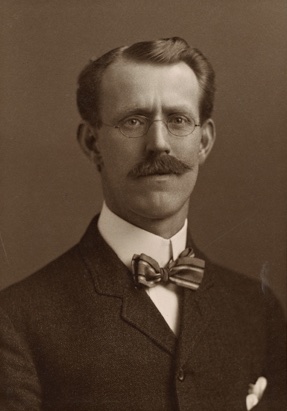
Stratemeyer used multiple pen names for much the same reason Hart does. Under a single name, his books would compete with each other in one market. With many names, he could work with several publishers and put out more books every year. A 1922 survey of about 36,000 American children reportedly found that most of the books they read came from his company. Hart's 21 pen names are a century-old business model running again on AI.
The difference is the collaborator. Dumas had Maquet, and Stratemeyer had dozens of ghostwriters. They sued over losing their names or later revealed that they had written the books. Hart's collaborator doesn't sue. Instead, new fights are breaking out over what that collaborator read and learned from, and over who owns what it produces.
Cheap books, passed hand to hand
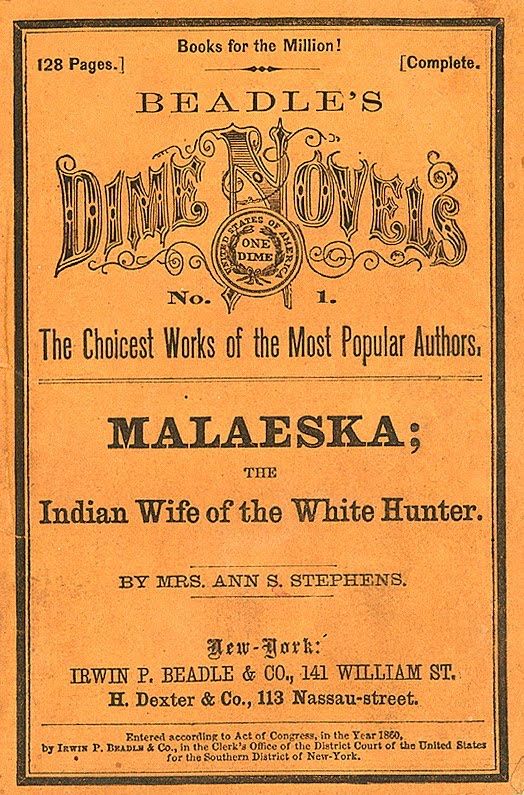
Fiction written fast to a formula has always been cheap and widely read. A classic example is the dime novel series launched by the Beadle brothers in the US in 1860. Each book cost ten cents and ran about 100 pages. The first, "Malaeska", sold more than 65,000 copies within a few months. Critics looked down on these books, but around the Civil War, dime novels quickly became hugely popular with young working-class readers.
In romance, there was Mills & Boon in Britain. Founded in 1908, the publisher turned its focus to romance in the 1930s. During the Depression, Britain was full of lending libraries that rented out books for two pence, and Mills & Boon aimed at that market with more than 160 titles a year. Harlequin, founded in 1949 in Winnipeg, Canada, began bringing Mills & Boon books to North America in 1957 and bought the company outright in 1971. Hart herself used to publish with both.
Korea had its own version. In 18th and 19th century Seoul, rental shops lent out hand-copied novels, and readers left notes in the margins, reviewing the story, cursing the shop owner over the fees and arguing with the reader before them. It was an early form of star ratings and comment sections. Genre fiction grew up hearing directly from its readers.
When the same line shows up in different books
Alter had a strange experience reading AI-written romance on the subway to work. She came across a line where the hero whispers the heroine's name like a prayer, and she had just seen the same image in another book. Flipping between books, she found the phrase in several of them, and several times within a single book, with the adjective shifting slightly each time, a worn prayer, a ragged prayer, a rough prayer.
When she asked authors who use AI, they all knew it. One said the phrase came up so often that she had banned it outright. Another called it a classic AI tic. The more AI-written books there are, the more visible these tics become to readers. After just a few books, you start to notice the same sentences repeating.
Serialized web fiction faces the same problem. In Korea, where web-novel authors have to post several thousand to nearly 10,000 characters a day to hold their rankings, the pull toward AI is strong. But when readers catch telltale AI sentences, or a leftover chatbot reply pasted in by mistake, the one-star reviews pour in, and some authors end their series. Readers who had grown attached to an author feel the most betrayed. Platforms also have a hard time catching it. Industry insiders note that AI use in webtoons tends to show in the art style, but with text there is almost no way to check. Platform review currently screens for violence and sexual content, and authors have no obligation to disclose AI use.
China has gone a step further. Fanqie Novel, a free web-fiction platform, sharply tightened its review process in the first half of this year. In June alone, it rejected contracts for more than 100,000 low-quality works and sanctioned 855 accounts for violating its rules. Other platforms, such as Qidian, told authors through their editors that AI participation in writing is banned altogether. In response, authors began swapping manuscripts to check that their work didn't read like AI, and some started using tools that rewrite AI sentences to sound human.
Whose writing are readers reading?
One of the two journalists said that if the first page said "written by Claude," he would be much less interested in reading it. Authors know this well. Alter said very few authors admit to using AI. Hart doesn't disclose it under her current pen names either. Still, the authors who openly use AI were confident that readers' attitudes would change. Once readers know that a person created the ideas and characters, and they find that the story is good, they will come around.
Alter herself said she felt a distance from the characters in the five or six novels she read knowing they were written by AI. She described the pleasure of reading as the feeling of being inside another person's mind, and called that a kind of magic. Knowing it wasn't happening, she found the stories fairly flat. She didn't draw a firm conclusion, though, and allowed that she may have felt that way simply because she knew AI wrote them.
The rules are still catching up. In September 2023, Amazon began requiring authors on its self-publishing platform to disclose AI-generated text and images, and it capped each account at three new titles a day. The US Copyright Office holds that works not created by a human can't be copyrighted. Stephen Thaler's lawsuit, which sought copyright for an image made by AI, ended on March 2 this year when the US Supreme Court declined to hear the case. Alter said publishers are especially worried about this point. No publisher wants to release a book it can't copyright.
Asked, half as a joke, whether publishers could cut out the authors and churn out AI romance themselves, Alter gave an interesting answer. Romance authors stay very close to their readers in online forums, and readers feel they almost know the authors personally. When a publisher signs a successful self-published author, what it is really buying is that author's brand and persona. Like the readers trading notes in the margins of rented books, genre fiction readers follow the story and also the person telling it.
In October, eight months later, AFP caught up with Hart again. She said she had published more than 370 books with AI since February 2025, had received tens of thousands of hate messages and several death threats, had taught her method to hundreds of people, and was preparing to launch software for AI authors. As the backlash grew, so did the number of people who wanted to learn from her.
What's left when making things gets easy
The cost of producing a book is now close to zero. But when 200 or 370 books come out in a year, the work of telling a carefully made story from one that just fills in a formula falls to readers. Fanqie rejecting 100,000 works in a month and Korean readers reacting with star ratings can both be read as fights over who will carry that burden.
So what's left for the person who writes? One thing is judgment, deciding what to write, which formula to twist and how, and where to stop. That is the part Hart claimed for herself when she called herself a director. But I think one more thing remains besides judgment.
People come to watch others struggle
People like watching other people suffer through things. I think that's a big reason why Infinite Challenge and 2 Days & 1 Night, two of the longest-running variety shows in Korea, were loved for so long. I'm lying comfortably at home, and the people on screen are jumping into the sea in the dead of winter and sleeping outdoors. Viewers laugh at the hardship, cheer the cast on and tune in again the next week. They come for the process of struggling more than for the result.
Psychology has a similar experiment. In 2004, Justin Kruger and his colleagues showed two groups the same poem. They told one group the poet spent 4 hours on it and the other that it took 18 hours. The people who heard 18 hours rated the same poem higher and said it was worth more. The same thing happened with paintings. The researchers called this the effort heuristic. When quality is hard to judge, people use how much effort went into something as a clue to its quality.
A 2023 study swapped only the labels on the same paintings, "made by a human" or "made by AI." People rated the paintings labeled human-made as more beautiful and more valuable. How much effort they imagined behind each painting explained part of the gap. The paintings were identical.
AI doesn't struggle. It writes a novel in 45 minutes and never gets tired. However good the result, if readers can't picture someone staying up all night behind it, one reason to open their wallets and give their time disappears. People pay for the effort of someone who seems to be working harder than they are, and they spend time watching that effort. Readers who grow attached to a web-novel author posting nearly 10,000 characters every day feel the same way, I think. That's also why readers who catch an author using AI feel betrayed, which runs deeper than disappointment. The book is the same, but they learn that the hard work they believed in and cheered for never happened.
Of course, struggle alone doesn't sell. Hart earned six figures a year without showing any struggle. In a genre with a reliable formula, some readers are clearly satisfied with the result alone. Still, what makes readers remember an author for years and wait for the next book is their belief about who wrote the story and how hard they pushed through it. The more AI takes over the result, the more what a person can offer shifts toward the process and the attitude behind it.
Who really wrote "The Three Musketeers", Dumas or Maquet, is still debated. Either way, readers have been reading it for more than 180 years, and Maquet's name only became known bit by bit, much later. It's too early to say what a writer turned director can give readers. The work might split, with AI handling the formula and people doing the twisting. Or readers might get so used to AI's tics that they stop caring. But so far, readers paying rental fees and leaving star ratings have always wanted to know who is telling them the story, and how hard they worked to tell it.
References
- Hard Fork, Something Big Is Happening + A.I. Rocks the Romance Novel Industry (2026)
- A. Alter, The New York Times, The New Fabio Is Claude (2026)
- AFP, 370 books in 20 months (2026)
- J. Kruger et al., The effort heuristic (2004)
- L. Bellaiche et al., Humans versus AI (2023)