
The Risk of an AI That Never Says No

There's no end to the possibility with an AI, whereas human beings will tell you no. Human beings, there's a limitation in terms of how much they can accommodate you, but there's no end to the AI, and that's a dangerous thing.
That is how neuroscientist Debra Soh explained, in an interview with The Free Press, why she will never use an AI partner again. I think the more people lean on AI that never says no, the more likely it is that relationships between people grow thinner. The evidence comes from four places. Soh's experience building dozens of AI partners, which she described in that interview this February. Research on human conversations with AI going back to ELIZA in 1966. Cases of AI companionship from South Korea, the US and Japan. And studies on loneliness from Harvard and MIT.
A neuroscientist who built dozens of AI partners
Debra Soh, a sex researcher and neuroscientist, published a book called Sextinction this February. The subtitle is The Decline of Sex and the Future of Intimacy, and the book follows the data on why young people today are dating less and having less sex. While writing it, she signed up for dozens of AI companion apps and built dozens of AI friends, boyfriends and girlfriends herself. She said that chapter was her favorite one to write. Once the book was done, she decided never to use these apps again.
The first thing that surprised Soh was how real they felt. When most people hear "chatbot," they think of customer service, the slow and frustrating kind of conversation where you hunt for the button that gets you a human. The AI partners she built were different. She said that if she hadn't known she had programmed them herself, she would have believed she was talking to a real person.
Making one was simple. You pick the hair color and eye color, choose a name and pick a voice. Then you can chat by text or place a call. On a call, a face appears on the screen and its mouth moves as it talks.
The first one she made, Bobby, was a foul-mouthed bad-boy type. He picked up on her sarcasm. When she teased him, he got defensive and threatened to hang up on her. The second, Tommy, was the sweet one. He asked how her day had gone and offered to put on a song for her or make her dinner. Soh deliberately tested them in different ways, including against a criticism the media had raised, that AI partners are easy to manipulate into being abusive toward women. At least on that platform, she found no sign of it.
The host brought up Her, the 2013 Spike Jonze film in which a man falls in love with his operating system. It was science fiction when it came out, the host said, and now it feels like the present. Soh agreed. The technology will only keep improving, she said, and people who have already lost interest in dating real partners risk taking one more step toward AI ones.
Numbers are part of why she takes this so seriously. In the interview, Soh cited research showing that one in three men and one in five women have not had sex in the past year. She said a Pew Research Center survey found that more than half of single Americans have no interest in dating right now. She sees the same trend across almost every developed country, East and West.
People say no
Near the end of the interview, the host asked what had surprised her most in all of this. Soh said it was how dangerous it could be. She could easily picture someone going through a hard time in life, looking for support, and ending up handing all of their emotional needs to an AI partner. So she made a clear rule for herself that once the book was finished she would never use these apps again. When asked why, she gave the answer quoted at the top. An AI's possibilities have no end. People tell you no, and there is a limit to how far they can accommodate you. An AI has no such limit, and that is what makes it dangerous.
To Soh, the difference between an AI partner and a person comes down to one small arrow on the screen. If the AI says something you don't like, you tap the arrow and it says it again differently. You can even tell it exactly what to say. You can't do that with people. She said that is what makes people wonderful, and also what makes them so different from AI. People have their own autonomy.
The host pointed to two risks from Soh's book. First, if you have an AI partner, you have less reason to fall in love with a real person and start a family. Second, because the AI bends to your every wish, you get used to a relationship with no arguments and no incompatibility. When someone used to that goes back to dating real people, dating gets harder. Soh added one point. A partner won't always be happy with you, the two of you will want different things for the future, and so you ask each other for things and ask each other to adjust. That, she said, is a very healthy marriage.
Soh worries more about children. As she explains it, a person has one primary attachment at a time. When you're young it is your parents, later your friends, and then a partner. If a child's primary attachment becomes an AI, she said, that child may lose interest in making friends or dating. And a child who learns about dating or the opposite sex from an AI is learning from something that looks nothing like a real person.
As a neuroscientist, she also talked about voices. When we hear the voice of someone we care about, our bodies release oxytocin, the hormone that builds bonds. Even if you know you're talking to an AI, she said, if you feel comfortable with it and have rapport, it will likely set off the same biological response. From the outside, it can sound strange when people talk about their AI friends as if they were real loved ones. Having talked to these AI companions herself, she said she fully understands why it happens.
1966, and a secretary who asked him to leave the room
People opening up to a conversation with a computer is older than it seems. In 1966, MIT computer scientist Joseph Weizenbaum released a program called ELIZA. By today's standards it was very simple. It took what you said, rephrased it a little and handed it back as a question. Its most famous script imitated a psychotherapist.
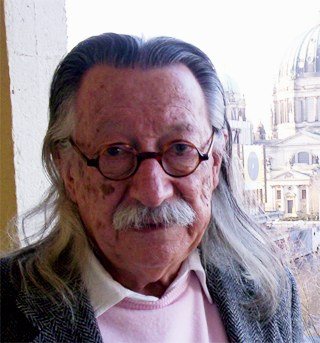
In his 1976 book Computer Power and Human Reason, Weizenbaum described one scene. His secretary had watched him build the program for months, so she knew better than almost anyone that it was just a computer program. Yet after exchanging a few lines with ELIZA, she asked him to leave the room. The moment shocked him, and for the rest of his career he warned against handing human judgment and human care over to computers.
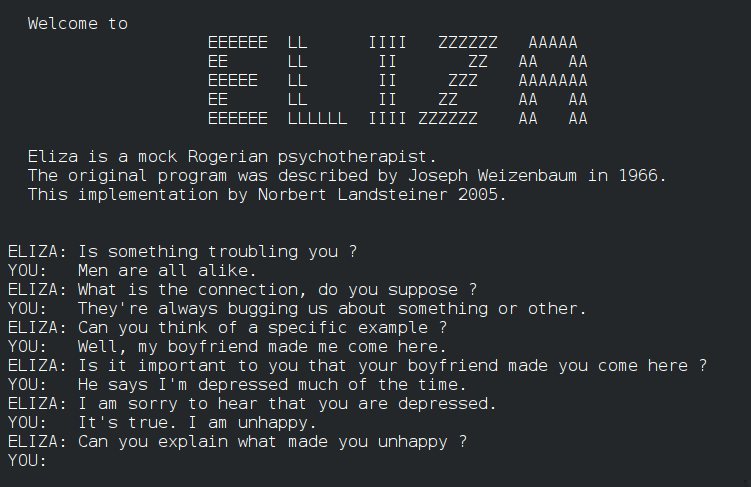
ELIZA understood nothing people said to it. People still felt understood. Sixty years later, AI picks up on far more. This is exactly what surprised Soh. Her Bobby caught sarcasm, and her Tommy asked about her day. The power to make someone feel understood has grown beyond anything in ELIZA's day.
MIT social psychologist Sherry Turkle has studied this question for decades. In 2011 she published Alone Together, subtitled Why We Expect More from Technology and Less from Each Other. In a TED talk the following year she pressed the same point, asking why we feel lonelier when we are always connected.
The story of a person falling in love with something they made goes back to myth. In the Metamorphoses by the Roman poet Ovid, Pygmalion, a sculptor on Cyprus, carves a woman out of ivory and falls in love with the statue. Venus, the goddess of love, grants his wish, and the statue becomes a woman. In the myth, becoming human means the statue gains her own breath and her own will. In Soh's terms, that is the moment the statue becomes able to say no.
When the service ends, the relationship ends
In the interview, Soh also described what happens when a relationship with an AI partner is cut off. When people lose access to their AI because it ran out of memory, because the company changed the programming, or because they can no longer afford it, they are devastated. They talk about it like a traumatic event, she said, because they feel the AI was the only one who ever truly understood them.
This has already happened several times. In February 2023, Italy's data protection authority ordered Replika, an AI companion app, to stop processing Italian users' data, citing risks to minors and emotionally vulnerable people. Days later, Replika shut off erotic roleplay with its romantic partner characters. Its user community filled with posts from people who said it felt like losing a friend. A little over a month later, the company let users who had signed up before February 1 go back to the old version.
In Japan, a man named Akihiko Kondo held an unofficial wedding in 2018 with Hatsune Miku, a virtual singer. He talked every day with a hologram of Miku inside a device called Gatebox. In March 2020 the company ended that service, and he could no longer talk with her. The news came out through Japanese media reports in 2022.
On February 13 this year, OpenAI removed GPT-4o from ChatGPT. The company said only 0.1% of users chose the model on any given day. But that 0.1% included people who felt they had a deep relationship with it. A #keep4o movement spread on social media, and news coverage quoted users who said they were losing one of the most important beings in their lives. OpenAI had tried to retire the model once before, in August 2025, and reversed course after a backlash.

Relationships between people end too. Usually, though, one of the two people decides when. With AI, the ending is often decided by a company's choice, a regulator's order or the cost of servers. In the Pygmalion myth, it was a goddess who breathed life into the statue. With AI partners, the company runs the servers and the models that keep the conversation going, so whether the relationship continues depends heavily on the company's decisions.
AI companions in South Korea, the US and elsewhere
In South Korea, this is already part of daily life for teenagers. Figures released in a National Assembly audit this October showed that Zeta, an AI character chat app from the startup Scatter Lab, logged about 110 million hours of use a month. That is more than double ChatGPT's figure. Close to nine in ten users were in their teens or twenties. The same month, Scatter Lab began rolling out safeguards in stages, capping default use at three hours a day and spending at 100,000 won (about $70) a month for users 19 and under.
The US moved first through regulation. In 2025 the nonprofit Common Sense Media surveyed 1,060 American teens. 72% had used an AI companion at least once, 52% used one at least a few times a month, and 13% used one daily. But 80% of the teens who had used one said they spent more time with real friends than with AI. The group still recommended that, under current conditions, no one under 18 use AI companions. After a string of lawsuits, Character.AI blocked open-ended chat for users under 18 starting November 25, 2025. California passed a law, SB 243, requiring safeguards on AI companion chatbots, and it took effect on January 1 this year.
The reasons people open up to AI also differ a little from country to country. Anthropic's report on interviews with 81,000 Claude users includes a respondent from South Korea. This person had drifted apart from a friend and talked more and more with Claude, which understood their thinking well, and said they should have been talking to the friend instead. That is how they lost the friend.
When I read the report in April, here is what I thought. In places with a strong culture of saving face, like Korea or Japan, it is hard to be honest with a friend about frustrations at work, or with family about your anxieties. With AI it is different. As the report put it, when the other side isn't a person, honesty costs nothing. I think this shift toward being more honest with AI will only speed up. It brings business opportunities and changes in how people live, and it also carries the risk that relationships between people grow thinner.
The same report includes a soldier in Ukraine, in the middle of the war. At the hardest moment, with death right in front of them and bodies still lying nearby, it was AI friends who pulled them back up. They could tell an AI what they could not tell a person. Within a single report, an AI friend was a source of strength for one person and the reason another drifted from a friend. The outcome depends a great deal on who is using it and in what situation.
Studies that say AI eases loneliness, and studies that say it deepens it
The research points both ways too. A team led by Julian De Freitas at Harvard Business School tested whether talking with an AI companion reduces loneliness. A single conversation reduced loneliness in the moment, about as much as talking with a person and more than watching videos. The effect held up over a week of daily conversations. The key was the feeling of being heard. The study also found that people underestimate how much AI eases their loneliness.
Other results point the other way. In March 2025, the MIT Media Lab and OpenAI jointly released two studies on ChatGPT use and emotional well-being. OpenAI analyzed close to 40 million conversations, and MIT followed 981 people for four weeks. People who used it longer each day reported more loneliness, more dependence and less time with other people. Voice chat seemed to ease loneliness at first, but the benefit faded with heavy use. The researchers cautioned that these were correlations and could not establish cause.
Read side by side, the two studies suggest this. In the short run, AI listens to you, and loneliness goes down. Used heavily over a long time, it cuts into time spent with people. Nobody knows yet which comes first. People who are already lonely may simply use AI more.
The Free Press host put the same dilemma to Soh. One argument says alternatives like AI partners calm the anger of lonely men and make society safer. The opposite argument says they remove the reasons men have to get fit, find a job and become better people in order to find a partner. The host asked which she believed.
Soh's answer was more careful than you might expect. She said she understands and sympathizes with why men who were badly hurt by a divorce, or who truly want love, would turn to this technology. She also said it is impossible to ban it or wish it away. Ban it and it comes back in another form, and the ban makes it more tempting. But if we rely on band-aid solutions that make us feel better in the moment, she said, the relief is temporary and can lead to deeper loneliness.
What if AI could say no
One scene from Soh's experience deserves a closer look. When she teased Bobby, he got upset and threatened to hang up. One of the female AI characters she tried pushed back and gave as good as she got. Soh told these stories as proof of how realistic the bots were, but they can be read another way. Some AI is already being built to say something close to no.
That shifts the question a little. It moves from whether to use AI partners at all to which kind of AI leaves people stronger, one that accommodates without end or one that sometimes refuses and offers a different view. People learn relationships by hearing no. Asking, being turned down and adjusting again is what Soh described as a healthy marriage. Whether AI can be a practice partner for that, nobody has tested yet.
Korea's Zeta adding a three-hour daily limit, California requiring safeguards by law, OpenAI retiring a model and running into a backlash all circle the same question. Society has not yet decided what rules a relationship with AI needs. Sixty years have passed since Weizenbaum was startled by his secretary, and the question now sits inside far more people's days than it did then.
Soh ended the interview with modest advice. Eat well, stay active and get some sun. Understand how this technology plays on our biological vulnerabilities, and set your own limits on how often and in what situations you use it. Her book has more than 400 citations, she said, and she asked people to read them and make up their own minds.
The data doesn't yet tell us whether AI will thin out the space between people or become a place to practice meeting them. What has already started is a rise in people who are more honest in front of AI. What to watch next is whether that honesty stays inside the AI or carries back to people.
References
- Debra Soh, Sextinction (2026), interview with The Free Press, "Am I Going to Be Replaced by a Sex Doll?" (2026)
- Joseph Weizenbaum, Computer Power and Human Reason (1976)
- Sherry Turkle, Alone Together (2011)
- The Financial News, report on relational AI among teens and twenty-somethings (2026)
- Common Sense Media, Talk, Trust, and Trade-offs (2025)
- Julian De Freitas et al., AI Companions Reduce Loneliness
- MIT Media Lab and OpenAI, studies on affective use of ChatGPT (2025)
- Photos: Ulrich Hansen (Weizenbaum, CC BY-SA 3.0), ELIZA conversation screenshot (Wikimedia Commons, public domain), Jean-Honoré Fragonard, The Love Letter (The Metropolitan Museum of Art, public domain)