
After Losing to AI, Go Players Got Stronger

November 15, 2026, Patrick Han
After losing to AI, Go moved in one direction. People learned AI's moves and got stronger. I think the same will hold in other fields. The people who spend a long time with the moves AI shows first, and can explain them in their own words, will lead the next game. I found the evidence in Shin Jin-seo's match against KataGo this July, Lee Sedol's retirement interview and his reunion with Demis Hassabis, a PNAS study of 5.8 million professional moves, and the history of Go openings.
Five games in March 2016
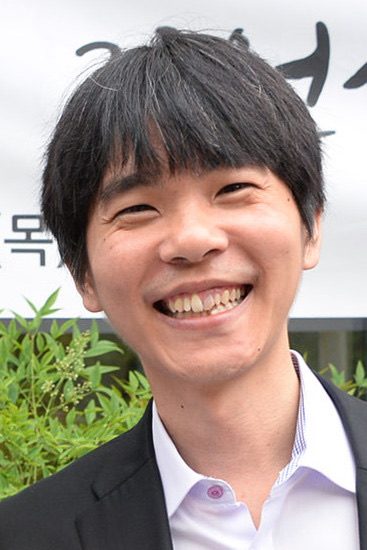
In March 2016, at the Four Seasons Hotel in Seoul, Google DeepMind's AlphaGo and Lee Sedol played five games. AlphaGo won four to one. Before the match, far more people had predicted a win for Lee.
The most talked-about moment was move 37 of Game 2. When AlphaGo put a stone on the fifth line on the right side of the board, commentators thought it was a mistake. Professionals rarely play there. DeepMind later said AlphaGo itself had put the odds of a human playing that move at one in ten thousand. Dozens of moves later, that stone was holding up the whole board.

The other moment people remember is move 78 of Game 4. Lee wedged a stone into the middle of the board, AlphaGo faltered, and Lee won that game. It was the only official win a human ever took from AlphaGo.
Three years later, in November 2019, Lee announced his retirement. On a radio show he said the biggest reason was his conflict with the Korea Baduk Association, and the second was AI. He had started Go at six and given it 30 years. Now something had appeared that he felt he could not beat however well he played, and it shook his values.
He learned Go as an art
On the same show, Lee talked about how he had learned Go.
"I learned Go as an art. A single work that two people make together."
He added that he wasn't sure anything like that was left. Professional players now learn Go from AI, can't win a single game against it, and end up copying its moves. If a far greater master than him appeared, he said, he would gladly learn from that person. Learning from AI gave him no joy.
An older friend I met through a book club is a developer at a large tech company. When we talked on the phone last month, he said that when Lee Sedol retired because of AI, he hadn't really understood what that felt like. Working as a developer, he had come to feel it secondhand. The conversation moved on from there. Mathematicians are watching AI solve hard problems, lawyers have it worse, and doctors already use AI a lot.
Go went through this ten years ahead of everyone else. Once AI shows you first the move that looks like the right answer, someone who has spent a lifetime looking for that move has to decide what to do next. Lee left the board when he faced that question. He is now a professor at UNIST, a science and technology university.
On April 29 this year, Lee met Demis Hassabis, the creator of AlphaGo, in Seoul, ten years after their match. They sat down together at Google for Korea 2026, an event Google hosted. According to a news report, he said that day:
"AI has changed so much that, watching AlphaGo during the match, I came to think I had really been a frog in a well."
At the same event he said AI is a partner for humanity, but that we have to be careful, because it could take the lead from us. Between the loss he felt when he retired and these words ten years later, a lot happened on the board.
AlphaGo started from human game records
In May this year, Eric Jang spent two and a half hours with Dwarkesh Patel redrawing AlphaGo on a blackboard. Jang was a researcher at what is now Google DeepMind Robotics, and until recently vice president of AI at the robotics company 1X. Over a few months off, he rebuilt AlphaGo from scratch. Asked why he did that instead of hanging out at the beach, he said AlphaGo's breakthroughs from 2014 to 2016 were what got him into the field.
Jang started with what goes on in the head of a strong Go player. Played to the end, a game of Go can run past 300 moves, and if you count every possible move, the branches outnumber the atoms in the universe. Yet a master can look at a board once and know whether it's winning or losing. Jang put it this way:
"A neural network in a human can somehow do all of this simulation at a glance. They just know within a few seconds, without actually playing every single game logically, based on crystallized knowledge and experience."
AlphaGo began by imitating that sense. It has one neural network that looks at a position and estimates the odds of winning, and a separate one that picks promising places to play. The first AlphaGo learned from human masters' games before anything else. According to the 2016 Nature paper, its first textbook was about 30 million positions from human games collected on an online Go server.
Jang saw this choice as a research basic. "In deep learning, initialization is everything," he said. The newer the problem, the better it is to start from something that already works and make it better. Human game records were AlphaGo's starting point.
A year later, even that starting point was gone. AlphaGo Zero, published in Nature in October 2017, knew only the rules and played millions of games against itself, with no human records. It then beat the AlphaGo that had beaten Lee Sedol, 100 games to 0. Lee pointed to this himself on the radio in 2019. The AlphaGo he played was still an unfinished version, he said. The Master version that played Ke Jie in 2017 was at a level no human could ever beat, and after that came the Zero version.
Now people learn from AI's games
Then things ran the other way. DeepMind retired AlphaGo in 2017, and KataGo, an open-source Go AI built by the American developer David Wu, came along. Jang said KataGo "achieved a 40x reduction in the compute needed to train a really strong Go bot," and that it is "what most Go practitioners today train against when they're playing an AI."
Jang benefited from KataGo too. Of a donation of about $10,000, he spent roughly $4,000 on exploratory research and about $3,000 on the final training run. "The compute required to be the first to do something is always much larger than the compute it takes to catch up," he said. The AlphaGo team had no strong AI to play against. Jang could train against KataGo from the start and get strong fast.
Human players went down the same road. A 2023 study in PNAS (Proceedings of the National Academy of Sciences) put numbers on it. Minkyu Shin of City University of Hong Kong, Thomas Griffiths of Princeton and their colleagues used AI to score more than 5.8 million moves that professionals played from 1950 to 2021. For each human move, they measured how much win probability it gave up compared with the move the AI would have chosen.
The result was clear. "We find that humans began to make significantly better decisions following the advent of superhuman AI," the authors wrote. From around 2016, when AI passed humans, professionals' moves got noticeably better. Novel moves, never seen before, showed up more often, and those novel moves were more likely to be good ones. The researchers suggested that once AI showed it was fine to break away from traditional strategies, players may have started exploring new moves more. The study looked at changes in the game records, though. It did not prove the cause with an experiment.
Something similar was tried in chess. A Google DeepMind study published in PNAS last year found chess concepts inside AlphaZero's neural network that rarely show up in human games. The researchers then had four former and current world champions work through positions built on those concepts. All four improved after studying them. With only four people, it was a small study, and the researchers called it a proof of concept.
The 3-3 invasion AlphaGo left behind
In July this year, in a TV studio in Seoul, Shin Jin-seo played a three-game match against the Go AI KataGo. It marked ten years since AlphaGo played Lee Sedol, and it was a two-stone handicap match, with Shin placing two stones on the board before play began. Players use handicap stones when the gap in strength is large, and the weaker side gets them. In other words, the world's top-ranked player needed a two-stone head start just to make it a contest. In 2019, before he retired, Lee said on the radio that even with two stones, professionals would find it hard, and described the gap like this:
"It's roughly a 17 or 18 point difference. That's a very big gap, a level where you can almost never win."
Shin got past that "almost never win." He won the series 2 to 1 on July 21. In the deciding third game, playing Black, he won by 11.5 points in 221 moves. Earlier, in Game 1, he had stumbled in the opening and lost after being overtaken. In Game 2 he chose a big joseki in the corner to shrink the board and steered the game calmly. One newspaper called that joseki "AlphaGo's legacy."
The 3-3 point is where the third lines from two edges meet in a corner. When an opponent has a stone on the corner star point, invading early at the 3-3 point beneath it was long seen as a losing trade that only gave the opponent a strong outside wall. When AlphaGo played it without hesitation, the standard star-point joseki were re-evaluated from scratch. Professionals spent years studying the change until it was second nature. With moves learned that way, Shin won Game 2 by 4.5 points after 290 moves.
After the match, Shin said this about AI:
"AI has played a big role in the development of human Go, and I've improved a lot through KataGo myself."
People spent years studying moves AI had shown them first, made those moves their own, and used them to beat a stronger AI. Shin said that in Game 3 he led the game without any big fights, confident he wasn't losing ground. Asked how it would go if, in a two-stone game, the AI also got 2 or 3 points of komi, he answered:
"It would be very difficult, but I don't think it's an impossible challenge."
According to Korea JoongAng Daily, the coach of Shin's national team says "the world's elite players still lose about 0.3 points of value on every move against today's strongest AI." Shin has cut that to about 0.2 points per move. The same article quotes a professional player: "If AlphaGo played KataGo 10,000 times, KataGo would win all 10,000 games." The AI Shin beat with a two-stone handicap had grown that strong.
New moves quickly become everyone's moves
This isn't the first revolution on the Go board. In the fall of 1933 in Japan, Kitani Minoru and Wu Qingyuan (better known as Go Seigen) introduced the New Fuseki. Instead of the old way of securing the corners step by step, it put weight on speed, scale and the center of the board. The new theory came out as a book and spread through the Go world almost overnight. A study from Cardiff University notes that experiments by many players before 1933 lay behind that revolution too.
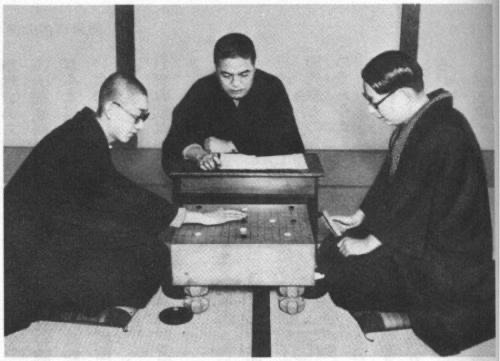
Bret Beheim of the Max Planck Institute for Evolutionary Anthropology mapped this history last year, using the opening moves of more than 118,000 professional games from 1600 to 2024. In his reading, the period from the Meiji era to World War II was when opening theory was overhauled wholesale. After the war those experimental openings died off all at once, and in the internet era openings grew more and more alike. As the Go-playing population grew and became more connected, diversity shrank.
As for the years after AlphaGo, Beheim found that the distribution of opening moves swung sharply for a while around 2018, then returned to pre-AlphaGo levels in the last few years. Across openings as a whole, the change was closer to gradual than revolutionary. AlphaGo's moves were new, but as everyone learned from the same AI, they quickly became moves everyone plays.
The way people learn Go has also differed by country. In Japan, from the Edo period on, Go houses such as the Hon'inbo passed their style down to their students under the shogunate's patronage. That's why Beheim put "feudalism" in his paper's title. In the 20th century, the founding of the Nihon Ki-in and newspapers sponsoring matches opened those walls, and Korea and then China rose to the top of the world. Today players in Seoul, Beijing and Tokyo turn on the same KataGo and review the same moves. If Beheim is right, skill can rise together while opening moves grow alike again.
Understanding the moves AI plays
Last month I talked over video with an older friend from college who worked in Silicon Valley for many years. He told me about someone he knows who went from Big Tech to become CTO of a startup. That CTO's engineers hit their targets, but when he asks how they got there, the answer is, "AI did it, so I'm not really sure." My friend brought up AlphaGo. A strange move that seemed to have nothing to do with Lee Sedol's way of thinking ended up deciding the game. In the same way, the path AI takes to a goal can differ from human logic.
Go players spent ten years in front of that strange move. At first they copied it. Then they studied why it was good. Moves they made their own, like the 3-3 invasion, became weapons they could use against AI. Between the Go that copies AI, which Lee Sedol worried about, and the Go that learns from AI to beat AI, which Shin Jin-seo showed, lies the time people spent trying to understand those moves.
Jang also talked about working with AI. To rebuild AlphaGo he mostly used Claude Opus 4.6 and 4.7. The models were very good at endlessly adjusting training settings to push performance up. Describe the plot you want and they run all the experiments and write the report. But he said the models the public can use today are still not very good at choosing which experiment to run next. "They don't seem to be able to step back and do the lateral thinking of, 'Wait a minute, this track doesn't really make sense.'"
He added a caveat. When the next generation of models arrives, this problem might fall to scaling alone. And he thought AI could practice that kind of judgment in environments like Go, where the outcome is quick to check. One of his reasons for rebuilding AlphaGo was to build that kind of practice environment.
Ten years ago, Go was the first field to lose to AI. Looking back, after that loss Go got stronger, got more alike, and became a game where people and AI learn from each other's records. Whether other kinds of work will follow the same order, we don't know yet. But in Go's ten years, the people who led the next game were the ones who spent a long time with the moves AI showed first and learned to explain them in their own words. That record is worth remembering.
References
- Dwarkesh Podcast, What rebuilding AlphaGo teaches us about self-play, RL, and future of LLMs, Eric Jang (2026)
- Korea JoongAng Daily, A decade after AlphaGo, Shin Jin-seo proves that humans still have game (2026)
- Newsis, Shin Jin-seo beats KataGo (2026)
- Sports Kyunghyang, Shin Jin-seo and "AlphaGo's legacy" (2026)
- Seoul Shinmun, Lee Sedol on quitting Go because AI can't be beaten (2019)
- News1, Lee Sedol and Demis Hassabis meet again after ten years (2026)
- D. Silver et al., Mastering the game of Go (Nature, 2016 and 2017)
- M. Shin et al., Superhuman artificial intelligence can improve human decision-making by increasing novelty (PNAS, 2023)
- L. Schut et al., Bridging the human-AI knowledge gap through concept discovery and transfer in AlphaZero (PNAS, 2025)
- B. Beheim, Opening strategies in the game of go from feudalism to superhuman AI (2025)
- Photo of Lee Sedol: LG Electronics, CC BY 2.0. Game 2 diagram: Wesalius, CC BY-SA 4.0