
Why Today's Luddites Took Up Guns and Firebombs

November 17, 2026, Patrick Han
I think anger at AI, like the Luddites' anger, looks for the nearest target when people have no channel to speak through. In April 2026 someone fired shots into the home of a city councilman who had backed a data center, and someone threw a firebomb at Sam Altman's front gate. My sources are the Luddite histories of Eric Hobsbawm and E. P. Thompson and South Korea's 2018 fight over ride-sharing.
A night in Nottingham, 1811
On March 11, 1811, in Arnold, a village near Nottingham, dozens of stocking frames were smashed overnight. A stocking frame was the machine that knitted socks and stockings. The people who broke them were the knitters who worked them. Within weeks the same thing spread to nearby villages, and the next year it reached Lancashire and Yorkshire.

Threatening letters to factory owners were signed "General Ned Ludd." Ned Ludd did not exist. A story went around about an apprentice who, around 1779, got scolded and broke two frames in a rage, and people borrowed his name. That is where the word Luddite comes from. With a leader who wasn't real, the authorities didn't know whom to arrest.
Yorkshire looked a little different. There the men who rose up were croppers. A cropper finished woven wool by trimming its nap with huge shears until the cloth was smooth. The skill took years to learn, so it paid well. Then shearing frames and gig mills that did the same job started arriving in the mills.
Enoch Taylor, a blacksmith in the village of Marsden, built those shearing frames. The big iron hammers the croppers used to smash them came from his forge too. The croppers called the hammers "Enoch," and the story goes that they had a saying: Enoch made them, Enoch shall break them.

The Luddites chose which machines to break
Today "Luddite" is a joke word for someone who hates new technology. The record shows the Luddites were fairly selective. The Nottingham knitters went after wide frames. On a wide frame you could knit a broad sheet of cloth, cut it up and sew it into cheap stockings. The quality was poor, but the low price dragged down the knitters' pay. Frames belonging to masters who paid fair rates were often left alone.
The British historian Eric Hobsbawm gave this a name in his 1952 essay "The Machine Breakers": collective bargaining by riot. Trade unions were illegal, and work was scattered across small workshops, which made a big strike hard to organize. Breaking expensive equipment, he argued, was one of the few ways those workers could put pressure on an employer.
Another historian, Malcolm Thomis, put it more plainly. The machines were simply the most visible target within reach. What the workers actually wanted was a minimum wage, quality standards and respect for skilled trades. They did petition Parliament, and a bill to regulate the stocking trade was introduced. The House of Lords threw it out in 1812.
So if you read the Luddites' anger only as hatred of new technology, you miss half of it. They were fighting over how the new frames came in, who got the gains, and whether they had any say along the way. Smashing frames was one of the few tools they had in that fight.
Parliament answered with the death penalty
In February 1812 the government brought in a bill making frame breaking a capital crime. On February 27, Lord Byron, a 24-year-old poet, gave his first speech in the House of Lords. He had an estate in Nottinghamshire and had seen the knitters' situation up close. He opposed the bill.
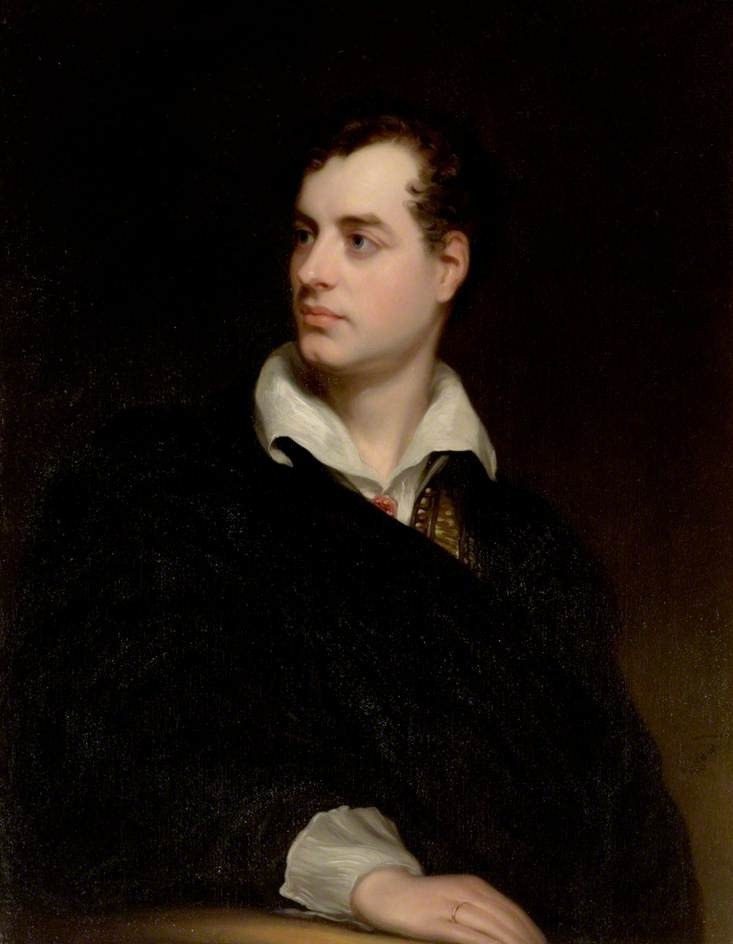
In the speech, recorded in Hansard, he said that nothing but absolute want could have driven so many once honest and industrious people to this. Then he asked:
Will you erect a gibbet in every field, and hang up men like scarecrows?
The bill passed anyway, and the government sent troops. By Hobsbawm's count, about 12,000 soldiers were deployed against the Luddites, more than Wellington took to the Peninsular War against Napoleon in 1808.
In Yorkshire it turned bloody. In April 1812 about a hundred Luddites gathered at a stone monument called the Dumb Steeple and marched on a mill at Rawfolds. The owner, William Cartwright, had armed men waiting, and two attackers were shot dead. A few weeks later another mill owner, William Horsfall, was shot and killed by Luddites.

At a special court in York in January 1813, more than sixty people were charged. More than a dozen were hanged and several were transported to Australia. After that the movement faded quickly.
A century and a half later, the historian E. P. Thompson wrote in the preface to The Making of the English Working Class (1963) that he wanted to rescue the poor stockinger and the Luddite cropper "from the enormous condescension of posterity." The losers' story tends to be remembered in the winners' voice.
April 2026: where the anger came from
Before dawn on April 6, 2026, thirteen bullets hit the front door of Ron Gibson, a city councilman in Indianapolis. A note under the doormat said "No data centers." Five days earlier, on April 1, a rezoning to let a data center go up in his district had passed a city committee, and Gibson had supported it. Four days after the shooting, early on April 10 in San Francisco, a 20-year-old man threw a Molotov cocktail at the gate of Sam Altman's home. The gate caught fire and no one was hurt. The tech journalists Kevin Roose and Casey Newton, citing the charging documents, said he was carrying anti-AI writings and a list of names and addresses of other AI executives and investors.
Roose and Newton drew a line first: violence is never justified. Newton added that hurting people to reach a political goal is not only morally wrong but also doesn't work. A few bullets won't stop AI.
Then they walked through three explanations for the anger. The first blames the media. Right after the attack, Altman posted on his personal blog with a photo of his husband and their baby. He called a recent New Yorker investigation about him "incendiary" and wrote that words have power.
Newton said that was only half right. The talk around AI is extreme, and some people take it seriously. But the people who have been pouring fuel on that talk are AI executives themselves. He read out a line Altman wrote on his blog in 2015: that the development of superhuman machine intelligence is probably the greatest threat to the continued existence of humanity.
Roose argued the executives' side. For the past decade, social media founders said their products would connect the world and do only good, and that didn't happen. AI leaders learned from that not to hide the risks. But when they talk honestly about risk they're accused of fearmongering, and when they paint a bright future they're accused of spin. Roose thought they have no way out.
The second explanation is jobs. Newton called it the skeleton key that opens the whole AI debate. Talk to an executive late enough into the night and you get a picture of abundance where nobody has to work. For ordinary people, he said, that picture is too far away to believe.
Roose pointed to what he sees as the biggest cultural gap between Silicon Valley and the rest of the country. People in San Francisco get excited about fast technological change. Most people don't want to live through an era when the world changes beyond recognition. They want stability, and they want to be able to plan their future.
The third explanation is resentment of elites. Newton described today's AI as change from the top down. A small group of very smart people raised enormous amounts of capital and is spreading the technology very fast, which feels different from the old Silicon Valley story that starts in a garage. Ordinary people never asked for this and feel they can't do anything about it. In Stanford's AI Index 2026, released in April, 31% of Americans said they trust their government to regulate AI responsibly, the lowest of any country surveyed.
When the only place to say no is your own town
Lay those three explanations next to Nottingham in 1812 and the overlap shows. The change came from above, nobody knew who would get the gains, and there was no channel to have a say. The knitters of 1812 couldn't vote. Unions were illegal. Their petition was voted down. What was left was the frame in front of them.
Newton named the channel ordinary Americans still have. In American life, he said, the one place a regular citizen can reliably use power is stopping something from being built in their town. Maine's legislature passed a temporary ban on large data centers through November 2027, though the governor vetoed it in late April and it never became law. A small city in Wisconsin passed an ordinance requiring a public vote on developments that come with large tax breaks. It was aimed at data centers and is now being fought in court. Newton said it was bleak that this is how Americans get to feel powerful, and he wished they had other tools.
Roose doubted it would work. Block a data center in one town and the company moves to another state or to Canada. He brought up California in the 1980s, when neighbors filed environmental review after environmental review to stop new apartments. They kept their views, and the state ended up in a deep housing shortage. He worried that fighting data centers could carry costs nobody expects.
So what would the right channel look like? Roose brought up a policy paper OpenAI published in early April. One idea in it is a public wealth fund that gives every citizen a stake in the gains from AI, the way Alaska shares its oil revenue with residents. He also mentioned programs in some countries that pay workers who lose their jobs to automation while they retrain. Newton joked that this would require America to become Europe overnight.
Newton's final diagnosis: this can't be fixed with better messaging. AI companies say they're going to shake up people's lives and leave the plan for afterward to the government. In the end it's a question of governance, and the government has to answer it. Roose pushed back that this let the companies off too easily, but admitted he doesn't expect much from the government either. He said he hopes at least a few lawmakers will take seriously ideas that sound extreme today, such as taxing the compute AI uses.
South Korea went through it first with taxis
South Korea had a scene like this too. On the afternoon of December 10, 2018, a 57-year-old taxi driver set himself on fire inside his cab, parked in front of the National Assembly in Seoul. He died. His note said Kakao's carpool service was illegal private-car taxi work and that the government should crack down on it. Ten days later, taxi drivers rallied outside the Assembly: 120,000 by the organizers' count, 40,000 to 60,000 by police estimates.
The fight dragged on for years. In March 2020 the Assembly passed a law that effectively shut down the original model of Tada, a service that sent rental vans with hired drivers. People still disagree about that decision. Some say it killed innovation, others say it settled the conflict inside the system.
The Waymo story Roose has told rhymes with this. Evidence keeps building that Waymo's driverless cars are safer than human drivers. But when Waymo tries to enter a new city, the first objection is usually about taxi drivers' jobs. Roose said parts of Silicon Valley sneer at that reaction, as if to say: we brought you a technology that saves lives and you're worried about cab drivers? He said that attitude is wrong.
Countries also absorb change at different speeds. When I hosted a meetup in Singapore last summer, people there told me Singapore doesn't adopt AI as fast as South Korea does. The temperament is cautious, quite unlike the anxious mood in Korea where falling behind feels dangerous. It made me wonder whether Korea is the unusual case. A country that adopts fast may also hit the conflict fast, and the 2018 taxi fight may be one example.
The people who loved to row
Molly Graham, who spent years building teams at Facebook and Google, said in a September interview that the emotion she hears most from leaders right now is grief. Work is changing so fast that people are losing parts of the job they loved.
She borrowed a line from an OpenAI leader: work used to be rowing, and now it's steering. Graham added an honest reaction. Plenty of people don't want to steer, she said. They just want to row. She also admitted it's hard to tell whether people love rowing or are afraid rowing is the only thing they're good at.
One product leader told her that working with AI all day had made them lonely, because the moments they used to share with colleagues were gone. Graham didn't rush to console them. She suggested sitting with the feeling for a while: change is hard, and it's fine to say it's hard even when there's good in it. She ended with this: grief sometimes needs a funeral, and a team needs room to mourn. But holding on to what's disappearing isn't safe either, so in the end you have to lean into the change.
The croppers of 1812 were rowers too. Trimming cloth with giant shears was a skill they had built into their bodies over years, and it was both their wage and their pride. What if, before they picked up the Enoch hammers, they'd had a place to grieve, and a place to turn that grief into demands? The answer Parliament gave them was a death penalty and 12,000 soldiers.
In Singapore last summer, I asked myself whether I was really getting ready for the AI era, and whether I was sure my business, or I, wouldn't be replaced. I had the same conversation with a friend in a taxi that day. We talked about how neither of us expected AGI to come this fast, and what we'd have tried again if AI this good had existed three years earlier. We both ended up admitting we didn't really know.
After the shooting, Councilman Gibson said in a statement that violence is never the answer. That was true in 1812 and it's true in 2026.
Reading the Luddites again, anger usually found the nearest target where the channel to speak was blocked. Back then it was the stocking frame. Now data centers and executives' front gates sit in that spot. A public wealth fund, paid time to retrain, or something that doesn't have a name yet: nobody knows what shape the channel for grief and demands will take in the AI era. I think building that channel has to happen alongside building AI.
References
- Hard Fork, Why the A.I. Backlash Turned Violent in America (2026)
- Lenny's Podcast, Molly Graham on the grief, burnout and opportunity inside the AI transition (2026)
- AP, Police arrest suspect in Molotov attack at Sam Altman's home (2026)
- AP, Indianapolis councilman says someone fired shots at his home (2026)
- TechCrunch, Sam Altman responds to 'incendiary' New Yorker article (2026)
- Stanford HAI, AI Index Report 2026
- OpenAI, Industrial Policy for the Intelligence Age (2026)
- Hansard, Lord Byron on the Frame-Work Bill (1812)
- E. J. Hobsbawm, The Machine Breakers (1952)
- E. P. Thompson, The Making of the English Working Class (1963)
- Malcolm I. Thomis, The Luddites (1970)
- Photo of the Dumb Steeple: Tim Green (CC BY 2.0)