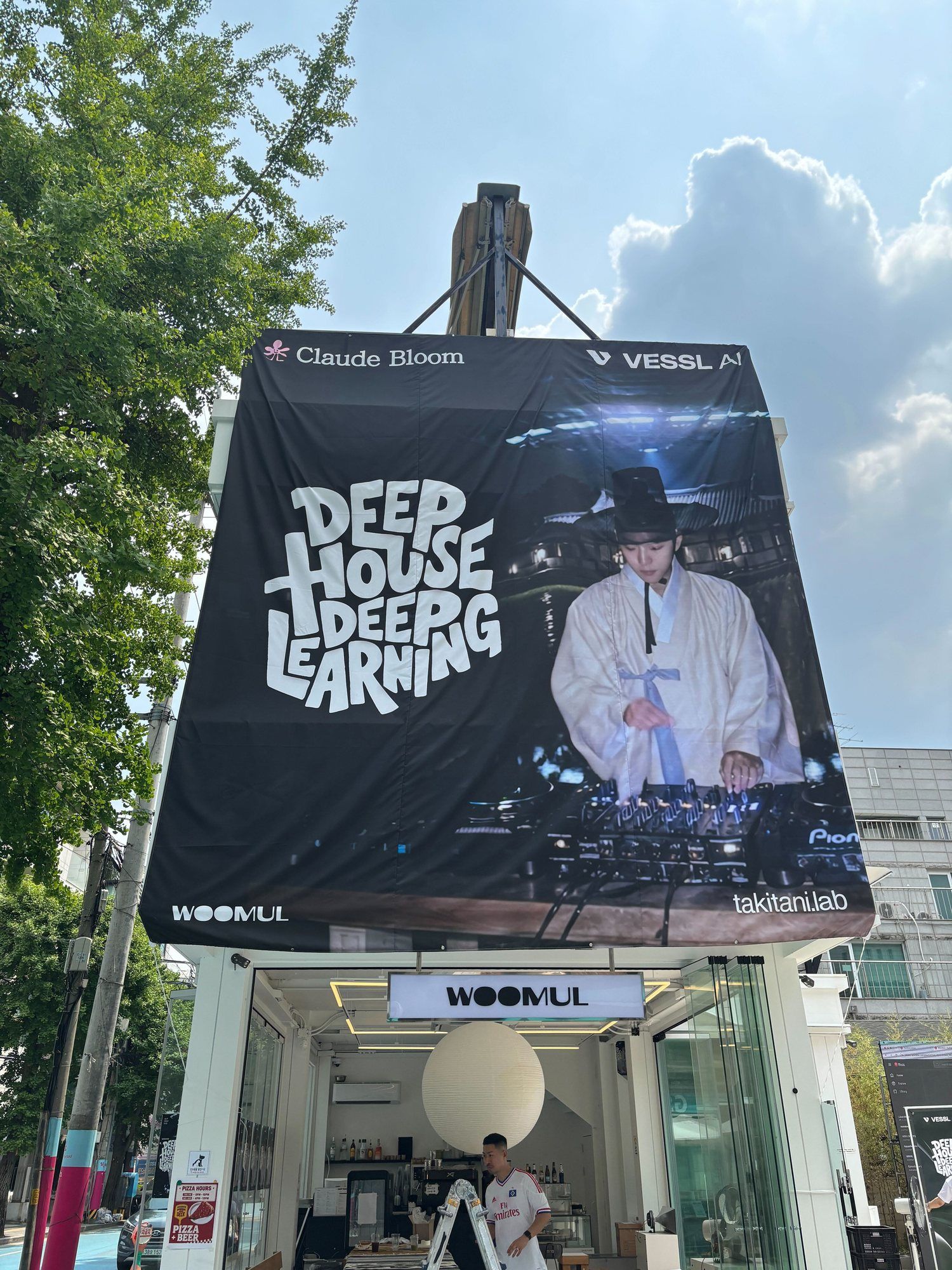
Bloom's First Big Event: Deep House, Deep Learning

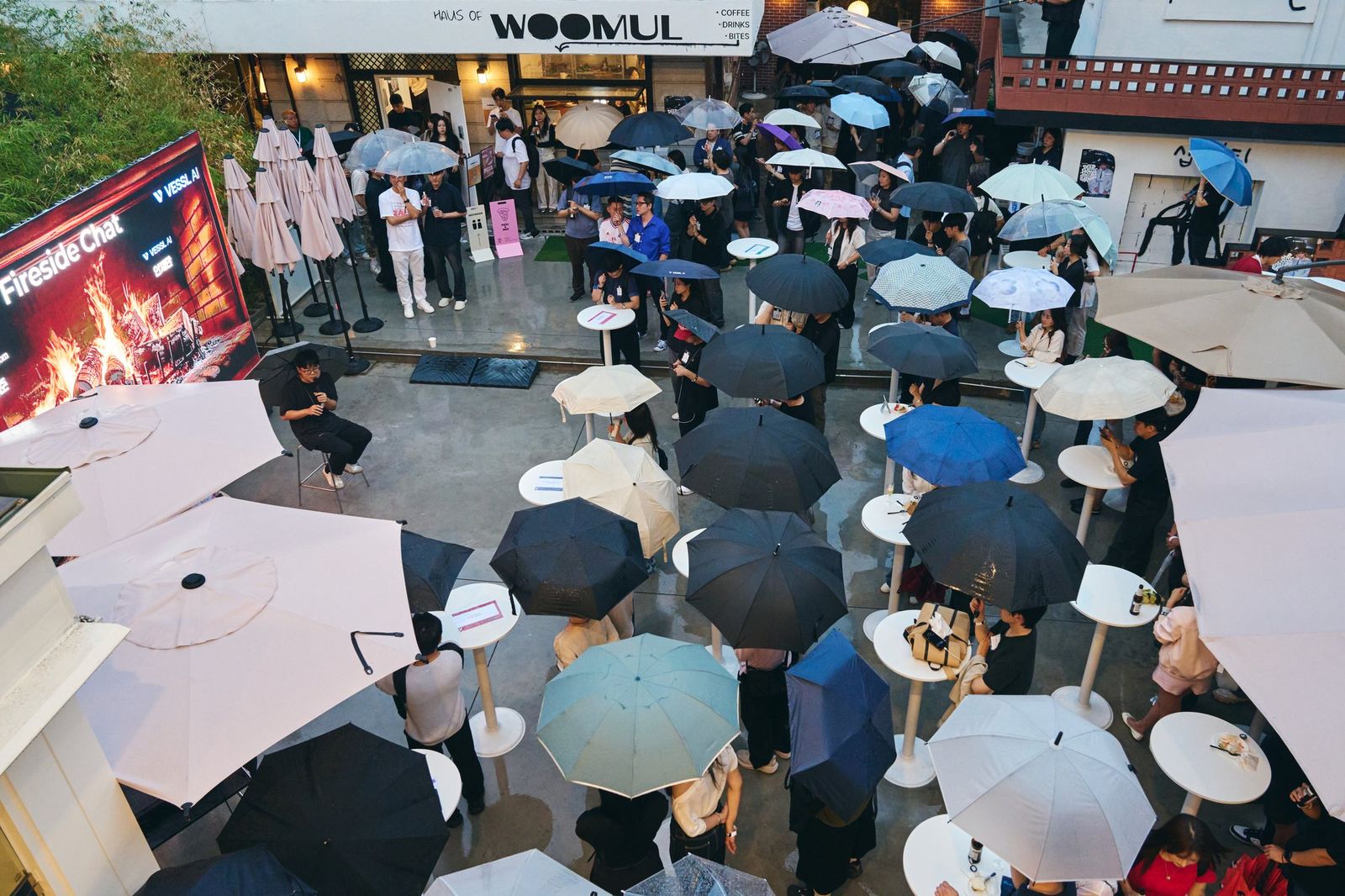
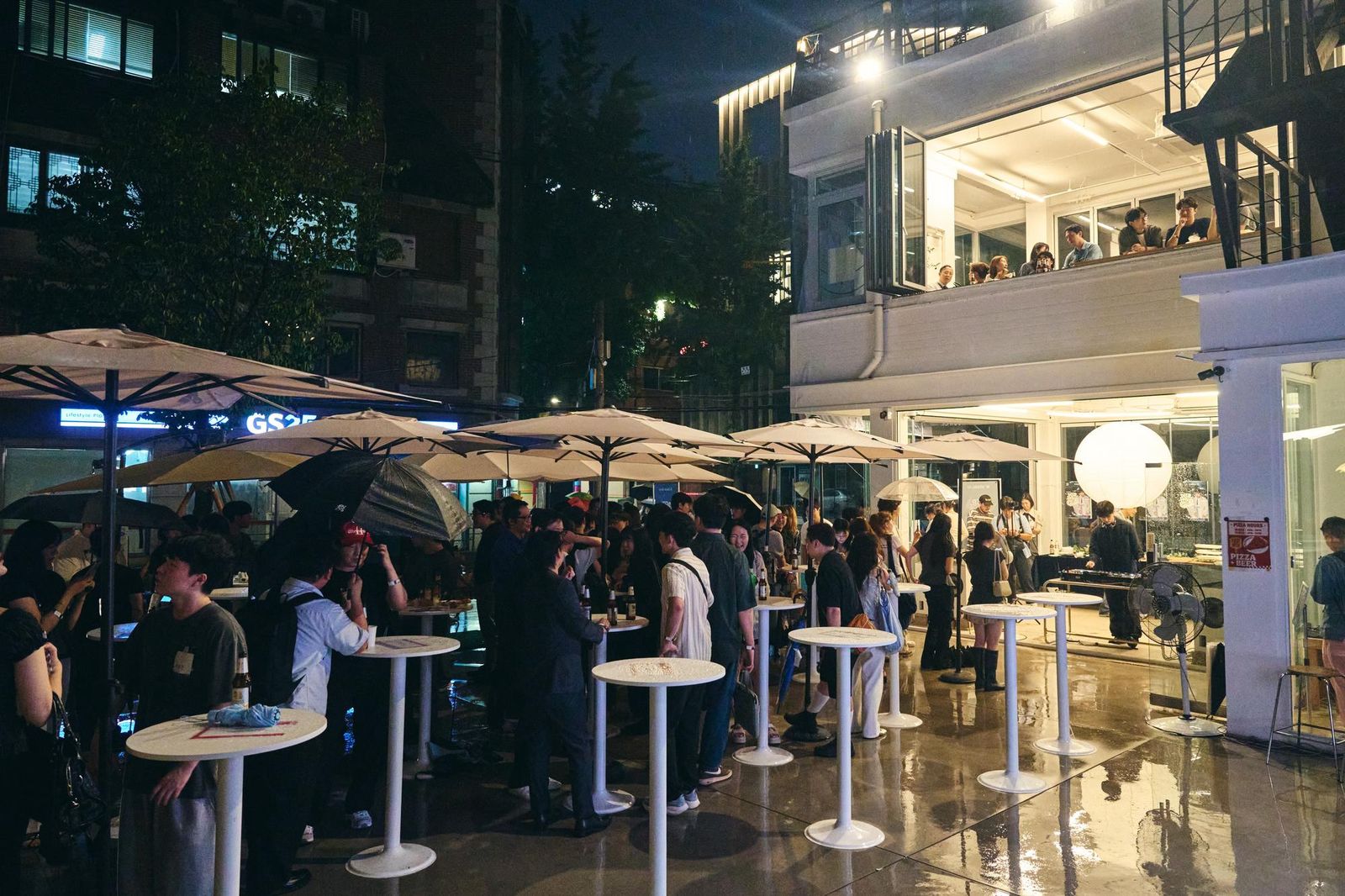
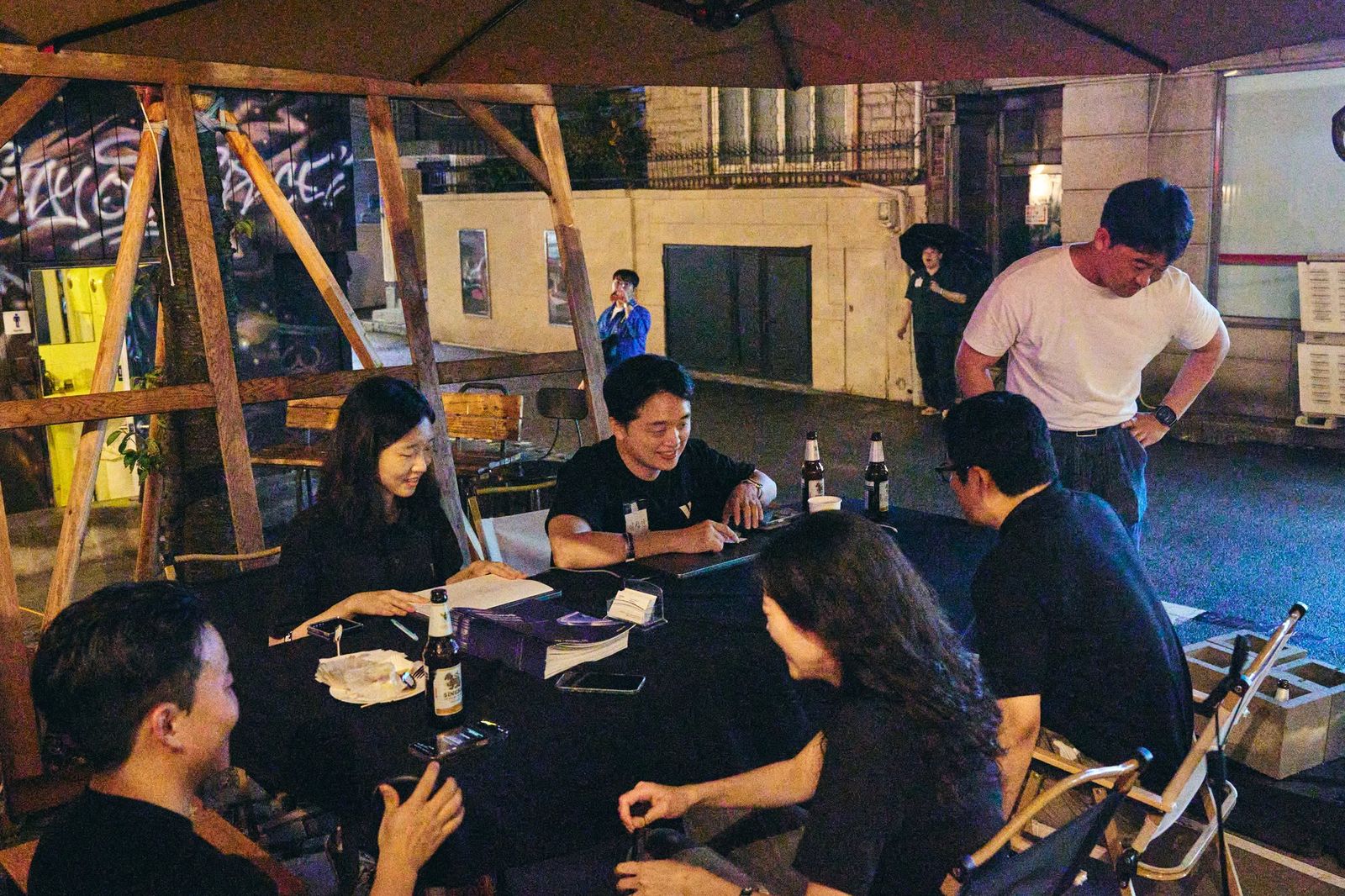
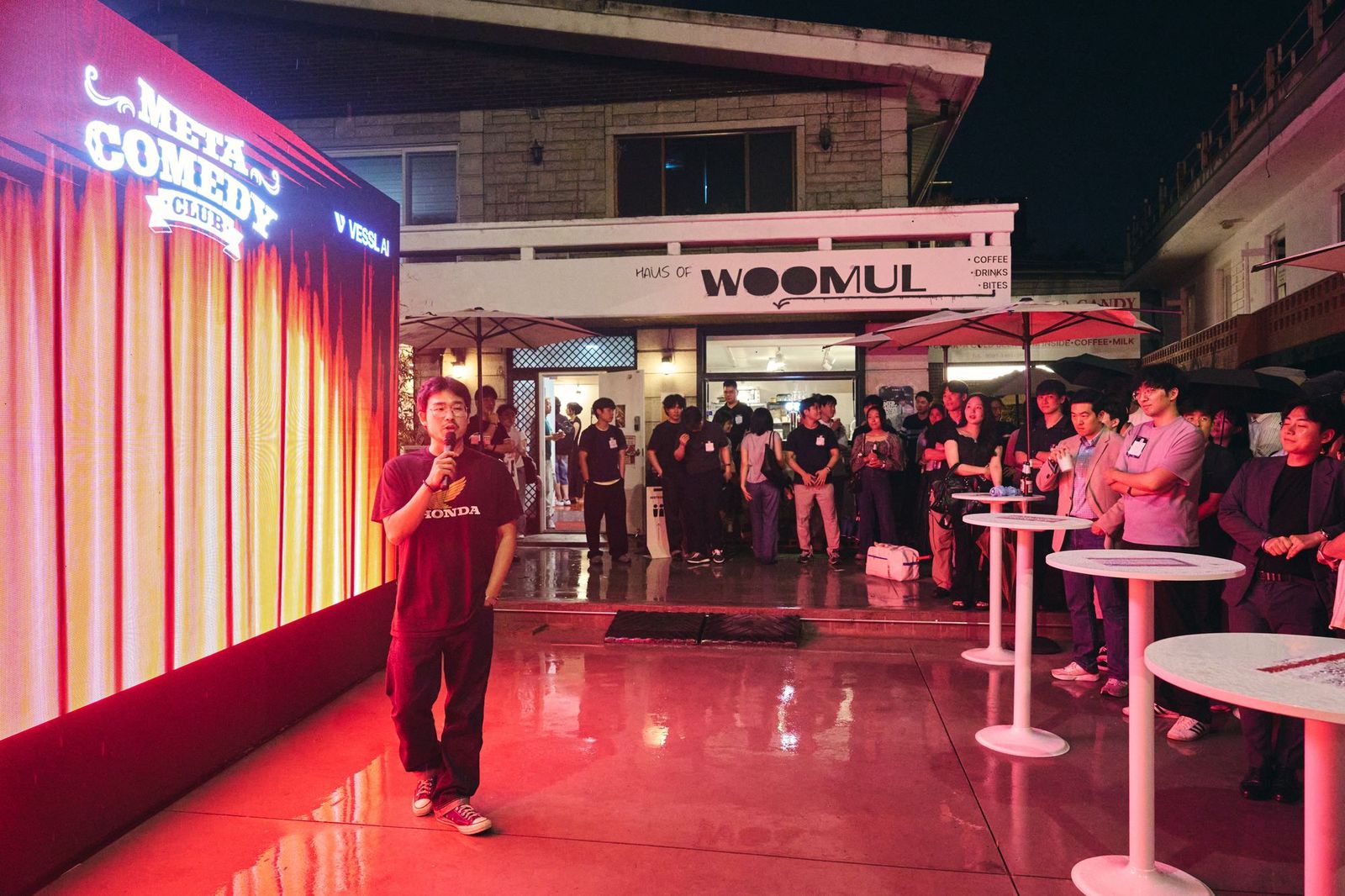
By June, Bloom was running seminars for about 100 people one to three times a week. To test how far we could push ourselves, for the first time we skipped the indoor lecture room, rented a roughly 7,000 square foot outdoor cafe, and held an event for 300 people. My conclusion: 300 people and 100 people are on completely different levels. We did prepare carefully. We had four extra staff and security guards on site, scouted the venue twice, mapped out how people would move, split the space into three zones in case it got crowded, and even engraved wristbands. We planned it together with the cafe's management. Then of course it rained that day, and I was pretty rattled. Luckily the rain eased into a drizzle, and after the first stretch we could run things without umbrellas.

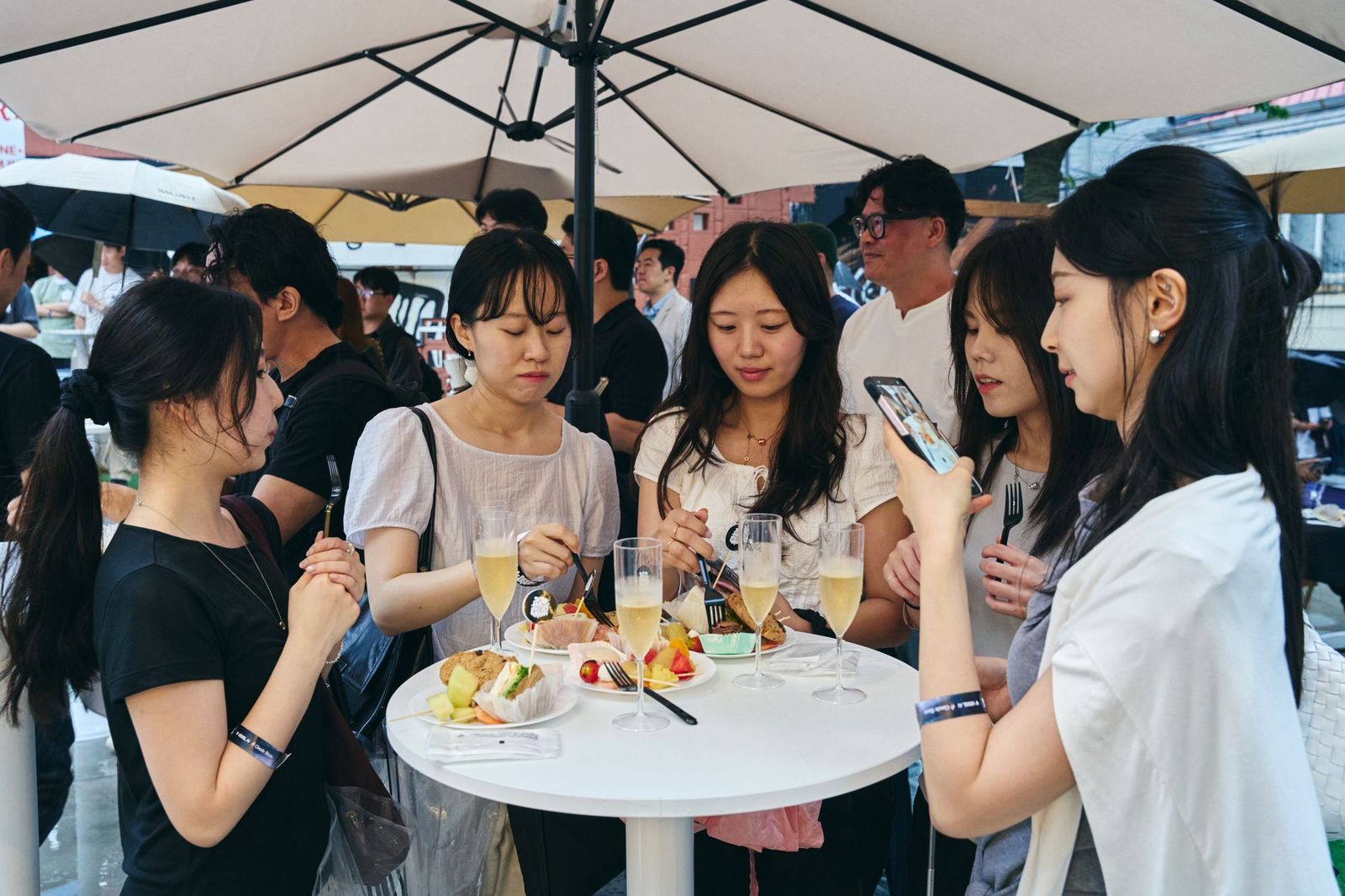
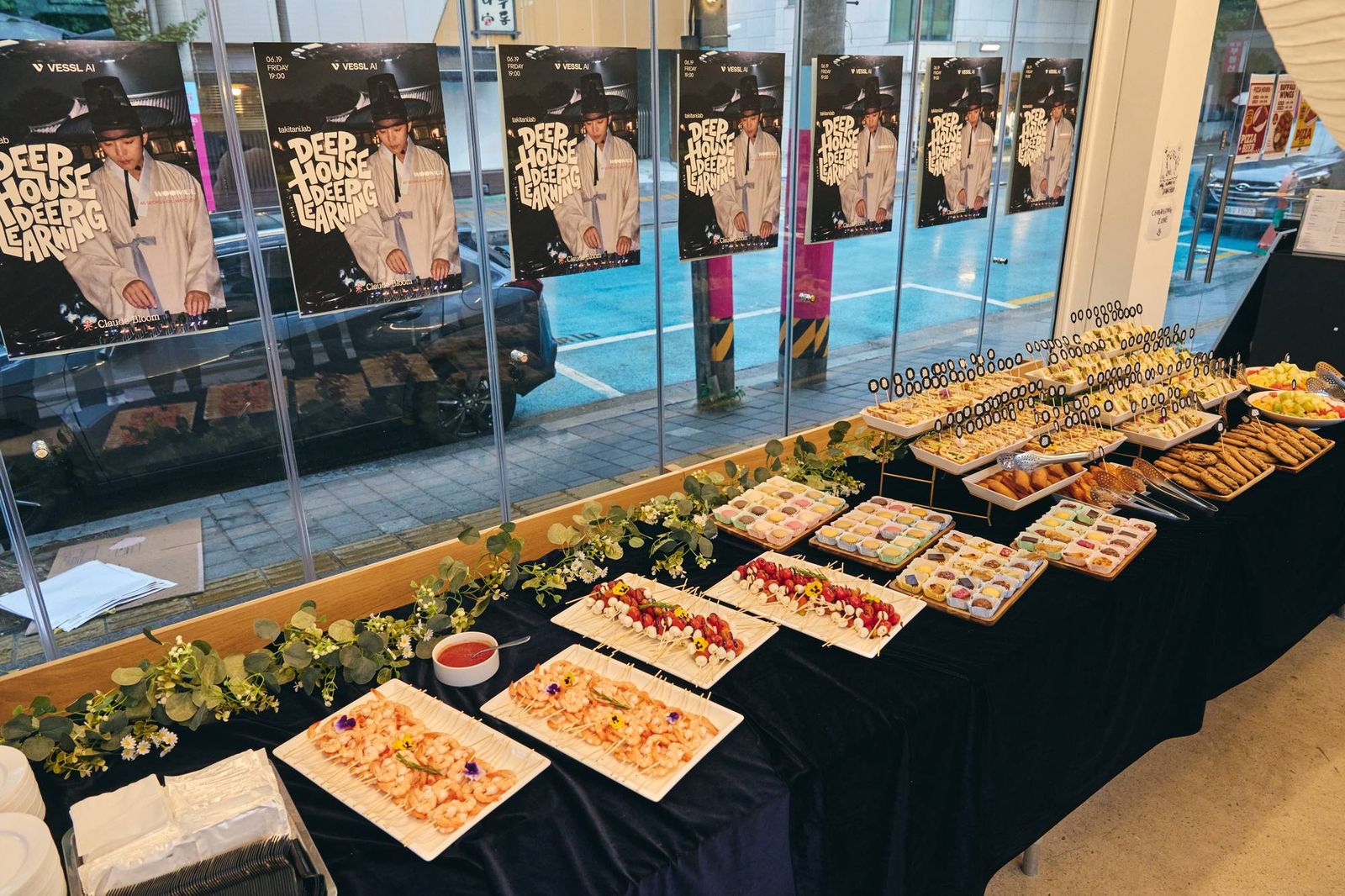
We're not a professional events company, so we definitely fell short on operations in places. For example, we got a sponsor for finger food catering, but because we only ordered finger food portions, it ran out much faster than we expected. So on the spot we bought 1 million won (about $700) worth of pizza and handed it out for free. But ordering pizza takes time, and some people probably never even heard there was pizza, so I'm sure some people left disappointed.
Near the end we turned the sound up, and since there are homes nearby, the police showed up. If you promise to turn it down, they just give you a warning and leave, but it felt almost like an American house party. When I studied in the US, people used to say it isn't a real party unless the cops come to the dorm. You blast music and party like crazy until the police show up around 2 a.m. and tell you to shut it off. That's normal in America, but we're not in America. Our on-site team handled even that somehow, and we got a few unusual experiences out of it.

It's hard to say things went 100% as planned. But despite the weather and all the operational surprises, when I looked at the videos and photos after the event, something I'd been too frantic to notice that night finally sank in. Wow, 300 people actually came. I also learned a big lesson: if we do a large event again, we need to prepare much more thoroughly. Especially for outdoor weather. Here is my recap of that night.
Who came that night
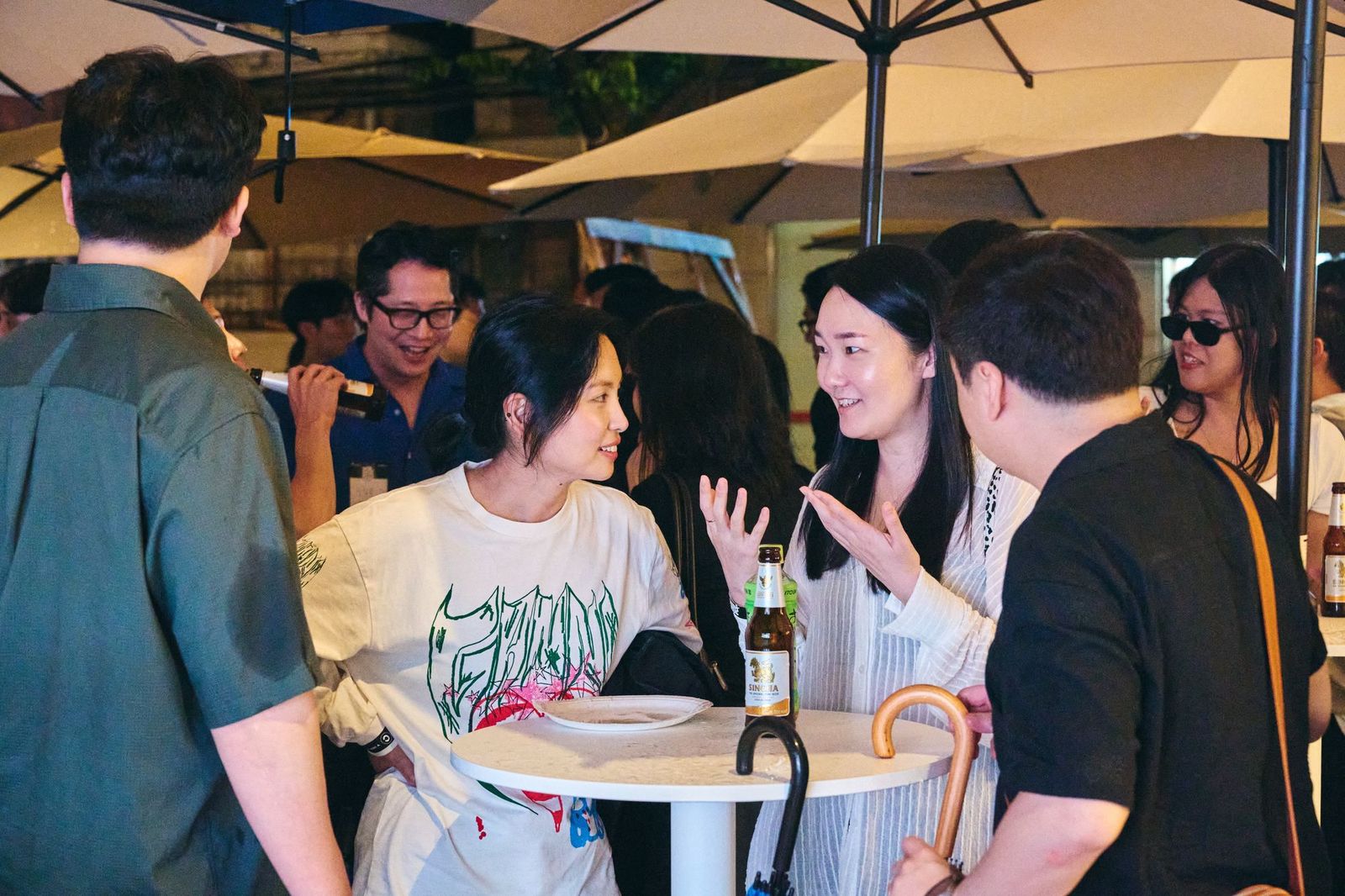
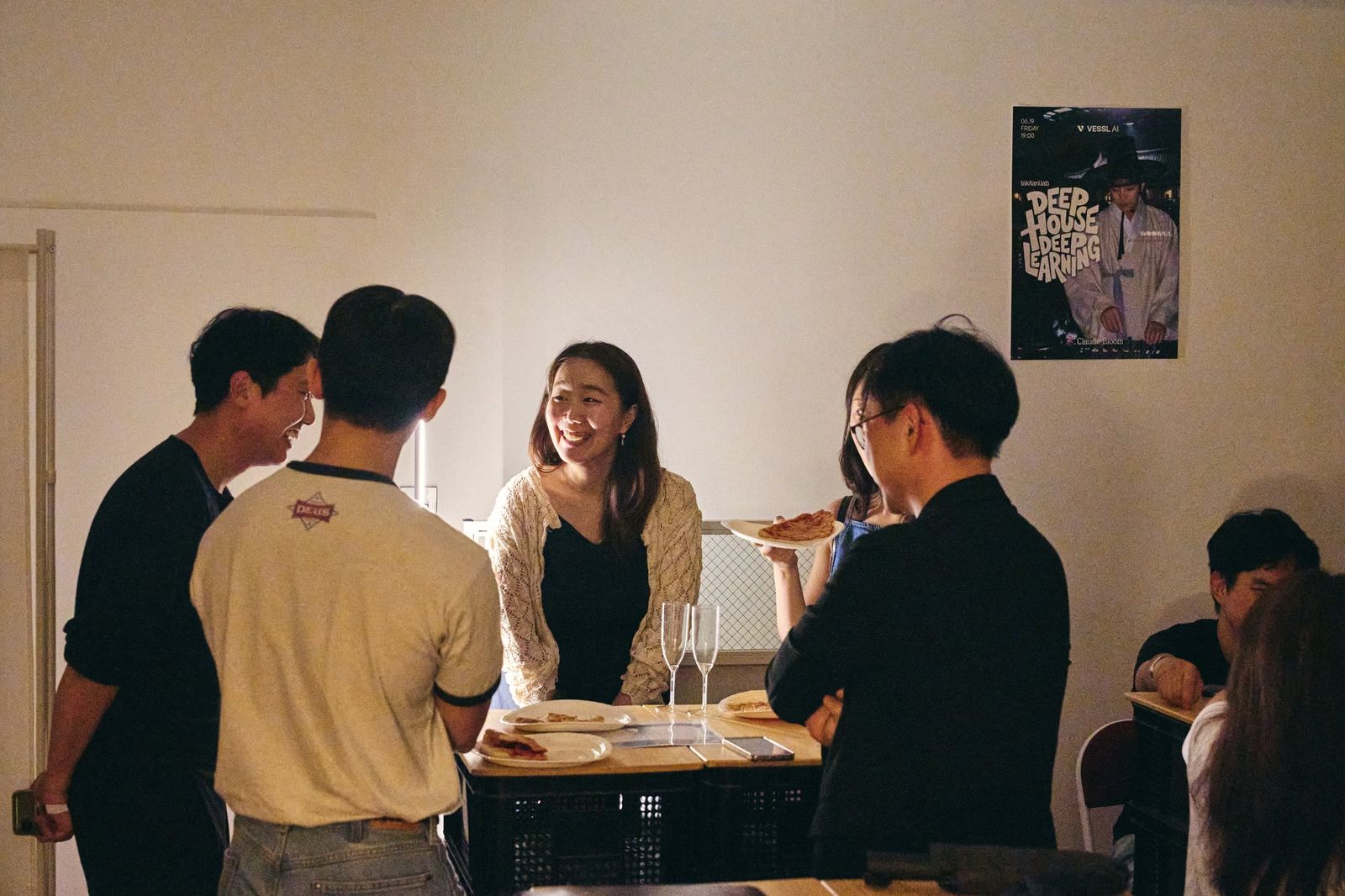
The concept was "Deep House, Deep Learning": a summer night mixing a seminar and a party, talking about deep learning while deep house music played. About 640 people applied, and we invited 300. By role, engineers were the largest group as always at 52%, followed by product planning and marketing, designers, and sales and business development. The range of industries was wide, from global big tech and Korean conglomerates to AI and semiconductors, games and blockchain, finance and logistics, consulting and law firms, and entertainment and retail. Bloom is an AI community, but we also look at AI from humanistic and philosophical angles, which is why such a mix of people shows up.

We hid treasure all over the space: GPU credits, limited-edition T-shirts, and priority passes. We also set up a lucky draw using wristband numbers. And so the night began.

His mother's illness, and the turn to AI infrastructure
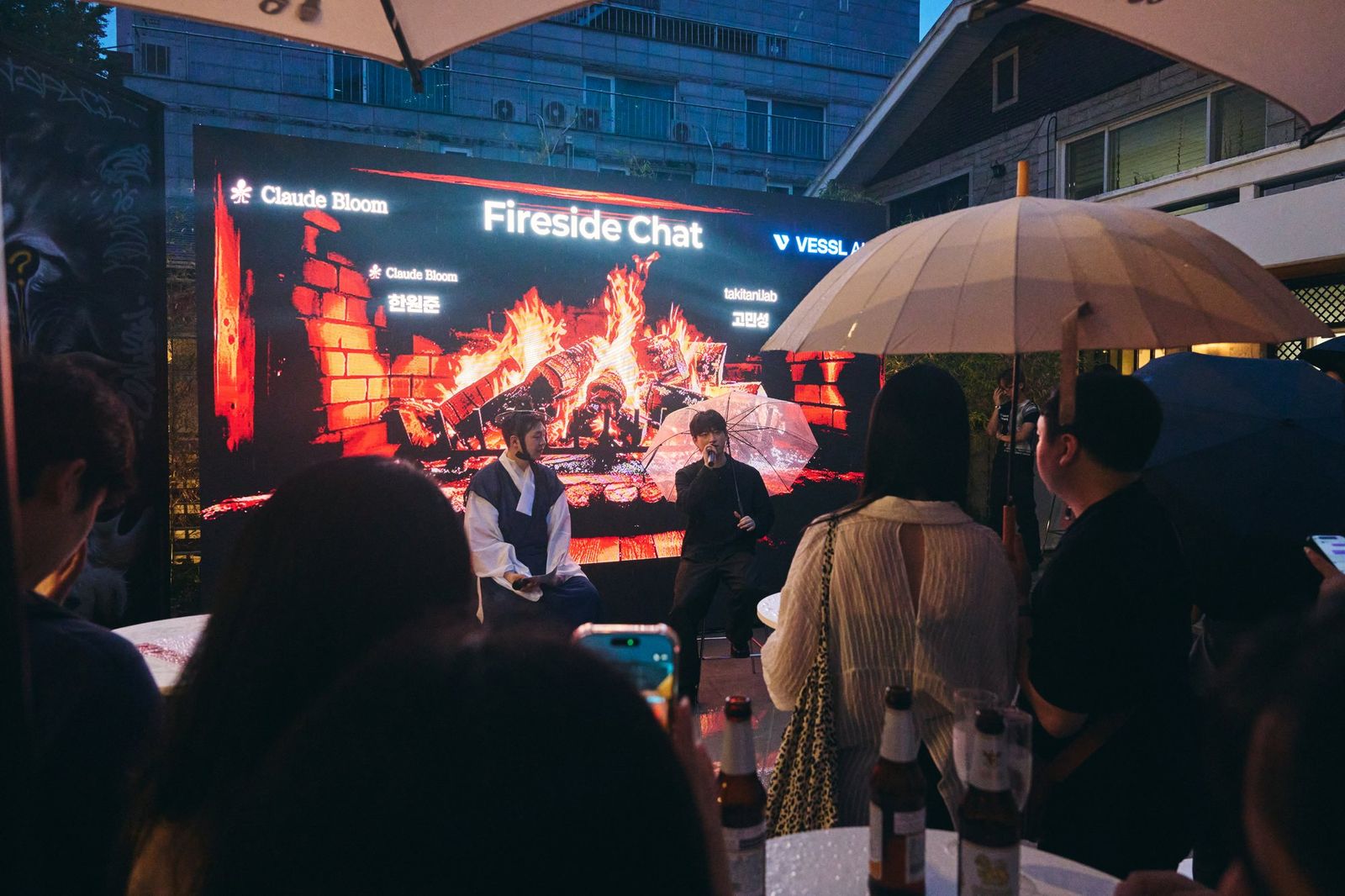
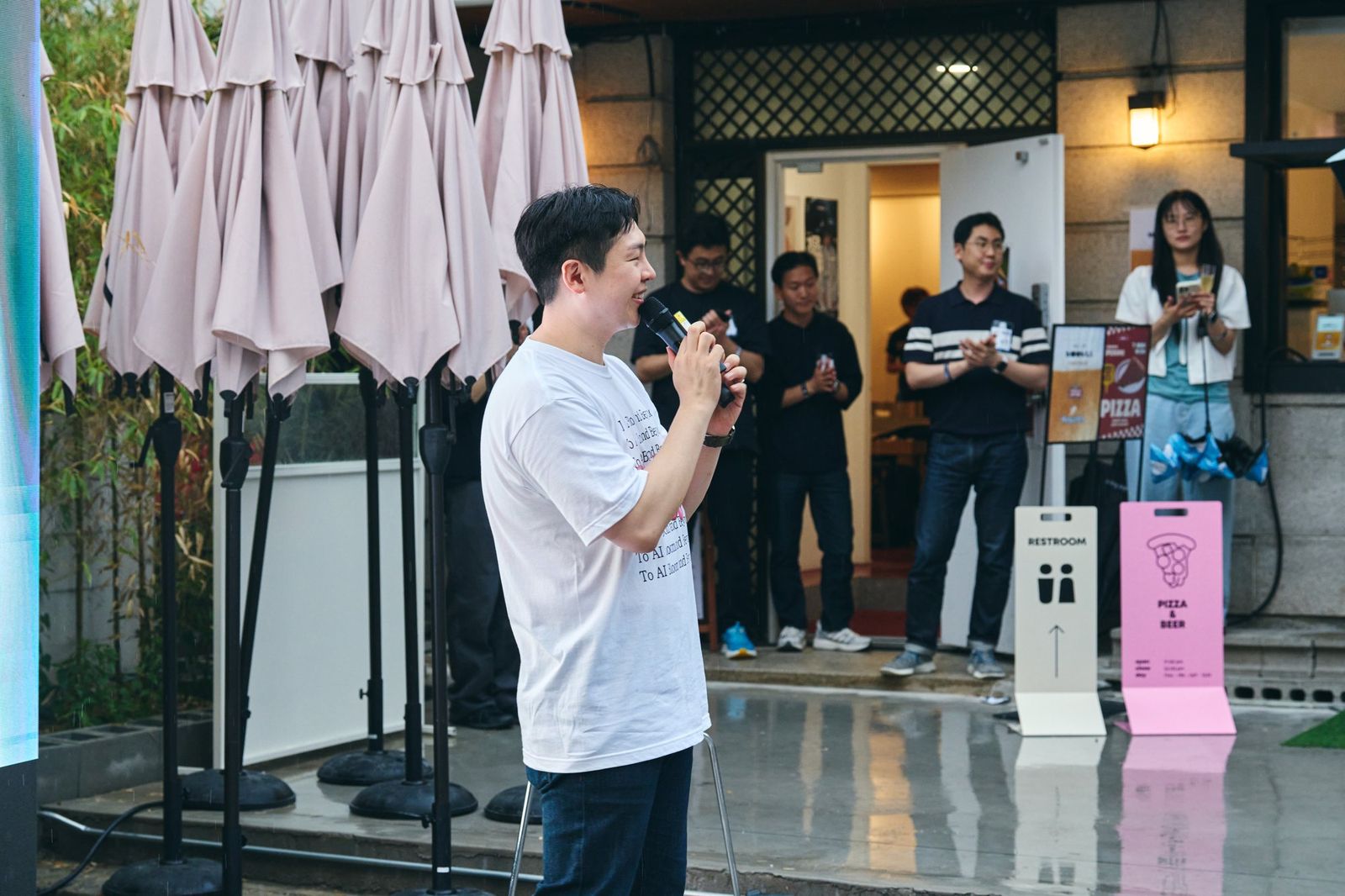
We opened with a fireside chat with the CEO of VESSL AI, which was also a sponsor that night. VESSL AI and my company go way back. We were close ever since we shared a WeWork, and they've come to our events often. Honestly, things like GPU credits and neoclouds were hard for me and I didn't really get them. But while preparing this event and hearing them explain it, I realized it's a really important service for AI builders, so I wanted to introduce them.
VESSL AI's CEO studied electrical engineering and math at KAIST and worked at Watcha (a Korean streaming service) and on Cookie Run (a hit Korean mobile game), among others. At Cookie Run, back when AWS was just appearing, he ran the game's infrastructure, overseeing systems used by 10 million and then 100 million people. The game was doing well and he was happy. Then one day his mother got cancer. "There was nothing I could do." Making games wasn't going to solve that. He thought of two paths: go to medical school and develop a cancer drug, or solve it with AI. The first would take ten years, and AI seemed like something that could solve it. So he joined a medical AI company.

But solving problems in medical AI turned out to be very hard, and his thinking shifted. There are huge numbers of AI researchers around the world working on these problems. If he could make them faster, wouldn't that get us closer to solving them? AI infrastructure had a bottleneck, so he'd help people use that infrastructure better. That's why he founded the company, six years ago.

He said he didn't think much about the name VESSL, as in a ship, at first. Looking back, though, it fit. A startup is like sailing: you can't see the destination, but you know which direction to go, so you head that way. Technically, too, AI training containers sit on top of the ship that is the cloud, so the name also means launching that ship.

GPUs are the moat
For a long time I knew VESSL AI as an MLOps platform, but lately they've been called a GPU cloud, a neocloud, and I was curious about that shift.
It started with MLOps. At the medical AI company, he saw that even after buying GPU servers, people tracked who would use them and when in Excel. He thought companies would use software that managed this well. The market's response was cold: "We don't even have GPUs. Why would we buy GPU management software?" So he said, "Then we'll give you the GPUs." That was the start. After that, well-known AI startups like Scatter Lab, Upstage, and Tomorrow Robotics started using VESSL AI's GPU cloud, and it has grown from there.

Which companies need GPUs? The ones developing their own models, and not just LLMs but physical AI, images, sound, and video. Also, when a company using LLMs sees its token bill climb into the hundreds of millions of won a year, it starts wondering if buying its own GPUs would be cheaper. Especially with agentic AI, which runs all day and burns through huge numbers of tokens.

I asked what GPU clouds mean for Korean AI builders. Without GPUs, you can't develop models on your own data or run your own computation. You end up just using commercial LLMs, and the costs keep growing.

Like Jensen Huang said, the more GPUs you buy, the more you make. The more you buy, the better models you build, the bigger the moat you get, and the better your business does.
So GPUs themselves will become the moat in AI, he said.
So how many GPUs does Korea have? Right now the whole world is short on GPUs. Even AWS, Google, and Microsoft have trouble getting them, and high-end Blackwell GPUs are even harder. But he said this is exactly where Korea has an opening. The biggest bottleneck in GPU supply is HBM memory, and Korea can use its position there to secure a lot of GPUs.

Nvidia can't not give Korea GPUs anymore.
At this pace, he thinks Korea will secure enough GPUs to rank in the top three in the world and become a center of AI infrastructure.
How does VESSL AI help? Using GPUs on a big cloud usually means paying hundreds of millions of won a year. As a latecomer, VESSL goes the other way. It rents out even a single GPU by the second or the hour, so you can fine-tune an LLM for the price of a cup of coffee. The idea is to serve small researchers well, not just big companies. That ties back to the goal he had when he founded the company: helping more AI researchers solve problems faster. They had 100 GPUs at the start of this year, have 5,000 now, and are expanding to 10,000 by year end and 50,000 next year.

He named three reasons GPU demand is exploding: agentic AI, physical AI, and sovereign AI. It used to be one answer per question. Now we give AI work to do, it runs all day, and one person's token use goes up hundreds or thousands of times. In physical AI, where robots take over human actions, there are many modalities, including vision, hearing, and touch, and it's hard to collect all that data in the real world, so companies also train world models that run simulations. And every country wants its own model, so everyone is scrambling to buy GPUs.
Was there a valley of death in six years of sailing? "Always." Every funding round was a "if the money doesn't come in three days, we're dead" situation. Once, through no fault of their own, the Silicon Valley bank holding their money collapsed and their deposits disappeared. I asked how he steadies himself at times like that. His answer was simple. "There's nothing you can do. So you think, oh well, let me do what I can, and go from there."

His five-year goal is to be a global top-three neocloud, securing more than 200,000 GPUs within the next two years. At 100 million won (about $70,000) per GPU, 10,000 GPUs costs 1 trillion won, and 200,000 costs 20 trillion. "How do you raise that 20 trillion? That's what every neocloud is worrying about these days." It's a really hard industry, and money alone doesn't solve it. At the end I asked him for a word for builders. He said he mostly gets his insights from the US. The gap between Korea and the US is a month or two, and a month or two is a long time in the AI era. So he goes to the US once a month.
A Joseon man on the decks
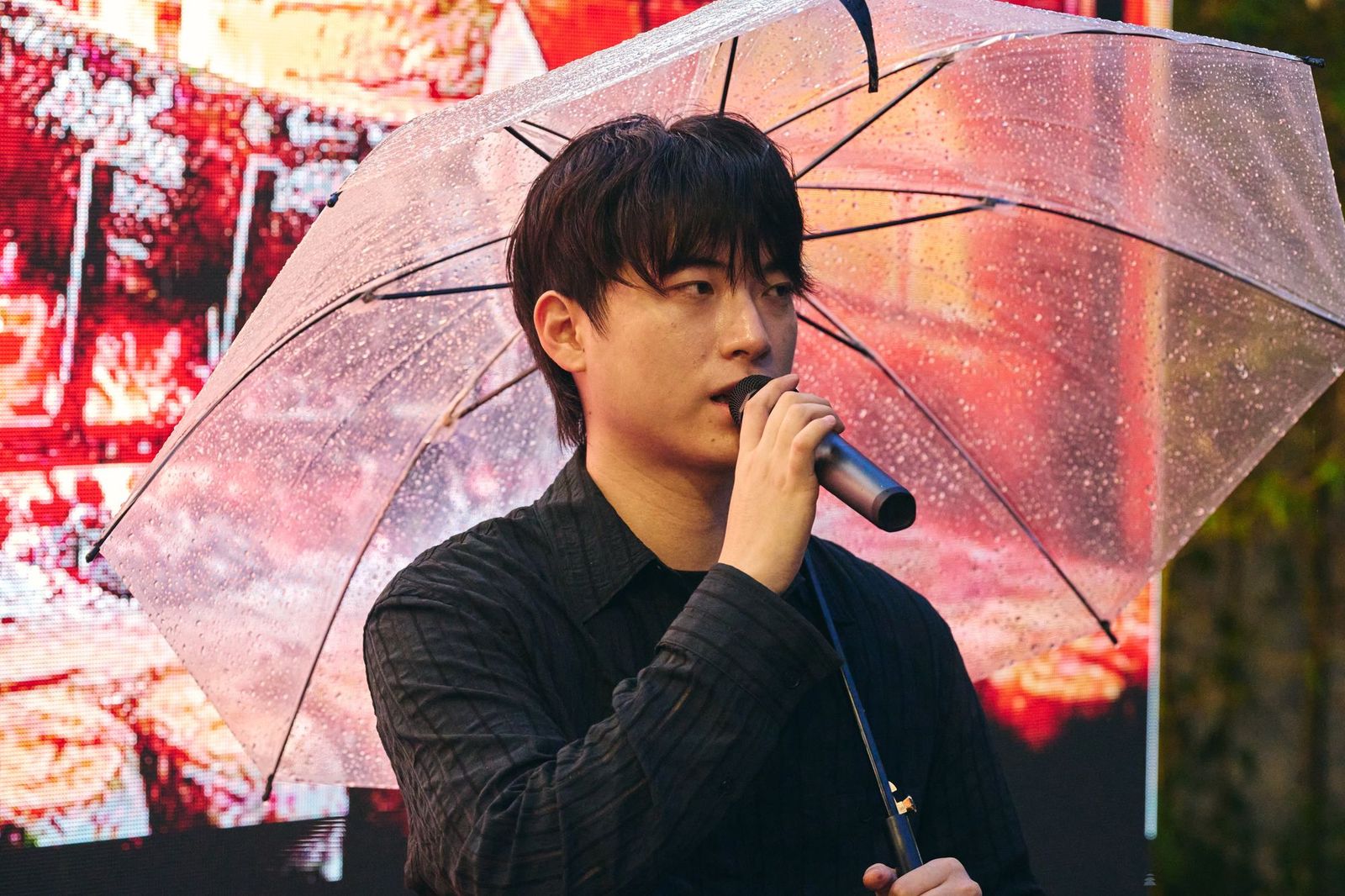
Next was a fireside chat with the creator behind Takitani Lab, known on Instagram for their AI content. The big banners and posters all over the venue that night were their work too. The concept: a man from the Joseon dynasty (Korea's last kingdom, 1392 to 1897) DJing. To match it, I hosted that night in a Joseon-style outfit.

The creator originally worked in video and screenwriting. Screenwriting is driven by narrative, but with AI they figured they could focus more on visuals than story. They started because they wanted to make the vague things they imagined, the kind of thing that makes you think "I don't think I've seen this before." Why Joseon? They DJ as a hobby, and plain DJing isn't much fun to watch, so they thought about what situation would make a DJ interesting. They looked for the subject furthest from the act of DJing, and that was Joseon.

It wasn't Joseon from the start. They tried all kinds of fun visuals, then the Joseon DJ suddenly went seriously viral, so they ran with it. Their formula is to fix the character (a Joseon man) and the action (DJing) and keep changing only the place. Joseon and DJing clash visually in so many ways that people pay closer attention.

The workflow has evolved too. Three months ago, at the start, one 15-second video took six hours. Now it takes two. Make the image, turn it into video, add matching music. Reels need urgency, so the music is beat-driven rather than melodic, mostly breakbeat or drum and bass.

The interesting part was where their 33,000 followers come from. Korea is under 30%, and over 70% are abroad, especially the US, Germany, France, and Spain. At first they assumed Koreans, who know Joseon, would like it most, but the response came from overseas instead.
Images of Korea that look old to us seem to come across to people abroad as hip, trendy traditional beauty.
It's similar to how foreigners find Korea's old traditional markets hip.
They had a clear philosophy about chasing tech trends. If you build content around a new video model the moment it drops, your content goes stale when that tech does, and you can't make that video anymore. "Rather than chasing technology, I tend to pick up the tech that can carry out my idea later." I asked where humans stand in the AI era. AI will probably handle theory and logic better, they said, but the human sense that runs against that is still ours. AI is a tool in the end, the latest in a line that runs from pen to brush, from fountain pen to film, and on to computers.
A designer asked what sets their work apart. With content flooding in, what helps you survive? Some people dismiss AI-made work as "AI slop," but the creator came back to the formula of character, action, and place.

A Joseon man DJing in front of a dinosaur doesn't exist anywhere. I think what sells comes from what didn't exist before.
Comedy, a lucky draw, and a long night
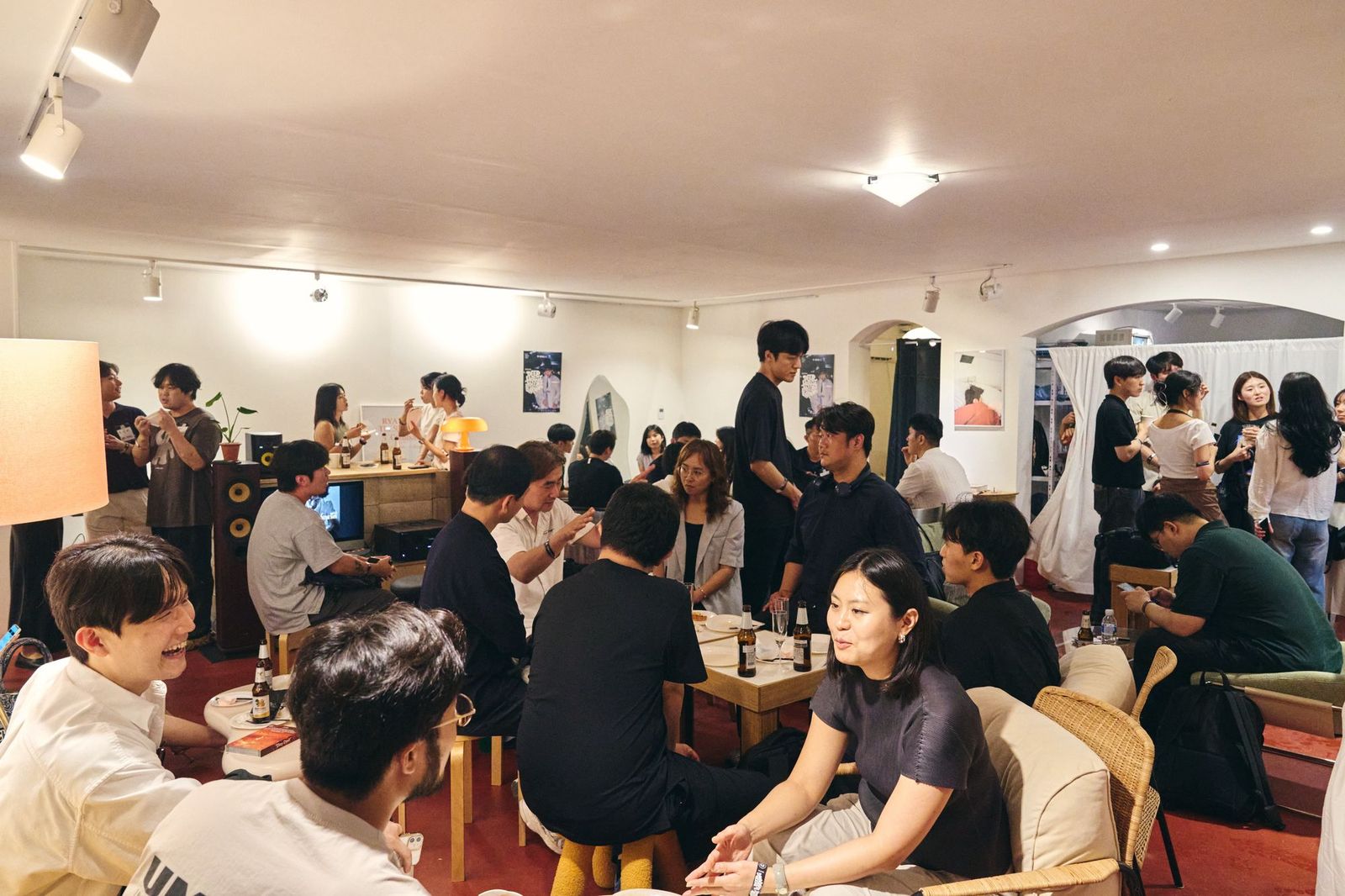
Between the two fireside chats and long after, there was a lot of small-group networking. A comedian from Meta Comedy got the crowd going again with AI stand-up comedy, and someone won $500 in GPU credits in the lucky draw. People hunted for the hidden treasure, Takitani Lab and the DJ team laid down beats, and Bloom cocktails went around. It was a four-hour summer night where the line between seminar and party blurred.